Showing posts with label rias baixas. Show all posts

Thursday, April 9, 2020

Happy Hour with Rias Baixas Albarino


While so much has changed these days, so has the wine programs I was supposed to attend. Obviously canceled. BUT we get creative in the wine industry, and the wine programs come to you. Instead of me going to a seminar and interviewing someone, I can record the seminar I attend and bring it to you.
This seminar was brought put on by Gregory + Vine with Spanish wine educators Rick Fisher and Kat Thomas.

Rias Baixas is known as Green Spain.The Albarino that comes from this region is crisp, full of minerality and lots of acid and you can smell the salinity as you open the bottle. As we get into the warmer weather this wine is a must. It will pair well with seafood, the porch, the boat, the beach, or the pool. Very important is to try different Albarinos from the different sub regions of Rias Baixas as the terroir of the regions are expressed through the wine.

The wine I tasted on during the program was Paco Lola 2018 Albarino. This is from the Val Do Salnes sub-region which is the birthplace of Albarino. The minute I uncorked the wine I could smell the sea. Other aromas that tickled my nose once I poured it in the glass was some white peach, lemon and wet stone. On the palate there was bouncing acidity, crisp with flavors of lemon, red grapefruit, green apple and some tropical fruit notes. A home run in my book!

You can check out my other articles on Rias Baixas Albarino listed below. First please enjoy the webinar or podcast below.

Webinar 


Podcast


Thursday, August 1, 2019

Sauvignon Blanc Lovers TRY Albarino


So you love Sauvignon Blanc. That is the only wine you drink, preferably from New Zealand with its racy acidity and the grapefruit pith. Yes, I have a friend that only drinks this wine. It’s not that she turns her head to other white wines that we make her try, this is what her palate likes. She hasn’t tasted Albarino from Rias Baixas, Spain.

If you are like my friend, you need to try Albarino from Rias Baixas, and here is why:

  • Albarino is pale golden yellow in color
    • Albarino is a dry white wine
    • Albarino should be drunk young
  • Albarino is full of mouthwatering racy acidity
    • Very aromatic
  • Albarino is a nice crisp white wine
  • Albarino has mineral overtones
  • You can smell the ocean breeze
  • You can taste the salinity of the ocean
  • Flavors and aromas of apple, citrus, stone fruit, some tropical fruit
  • Has a nice crisp finish


This summer the best place to drink your Albarino

  • By the pool (with friends of course)
  • On the boat
  • At the beach
  • Order it with your oysters

Albarino week is the first week of August, so get out of your comfort zone, keep your palate open and try a bottle.

I can suggest these two beautiful Albarino’s too get you started on your experience with this wonderful grape.

Paco & Lola Albarino, Rias Baixas SRP $21.99
A fairly new winery founded in 2005 is the initiative of a group of winemakers in the region of O Salnes. Their cooperative is called “Sociedad Cooperative Vitivinivola Arousana” and is comprised of over 430 members. They have 220 hectares in the Val do Salnes area.

The Albarino is produced from free run juice from grapes of their best vineyards. The soil composition the grapes are grown in are sandy loam, granitic and slightly acidic. The wine is fermented in stainless steel for 21 days remaining on its lees until bottling.
Once you open this wine it will have you wanting more. You can smell the floral notes and the fresh ocean breeze. Taste the salinity along with citrus and lime, leaves your mouth bursting with bright acidity and a smile on your face.


Bodegas Eidosela Albarino, Rias Baixas SRP $13
This winery also fairly young, founded in 2003 by a group of viticultural entrepreneurs. The name Eidosela is named after the area the winery is located in, Eidos and Sela in the County of do Tea.
The wine is straw yellow in color with greenish undertones. You can smell the salinity coming from the glass along with hints of fresh lemon zest. On the palate hints of stone fruit, peaches and apricot leave you with mouth-ripping acidity. A little hint, once this wine warms up a tad, the fruit and acidity shine.


Friday, June 23, 2017

Winephabet Street - A is for Albarino


I embarked on a new adventure with Lori Budd of Dracaena Wines two weeks about call Winephabet Street.  Think Sesame Street for wine lovers.  Our first show was all about the Letter A and Albarino.

 Albarino is the indigenous grape variety hails from the Rias Baixas region of Spain.  Rias Baixas is located in Northwestern part of Spain that is known as Galicia or Green Spain. It's nice and acidic, crisp, and you can taste the salinity from the ocean the influences the grape growing. If you've never had an Albarino, I suggest picking one up and trying it on a hot summer day.  It's exciting and refreshing and priced $20 and under.

Watch the episode below and learn all about Albarino.  Catch us on Monday, July 17th at 8pm (link to follow) as we learn about the Letter B - Beaujolais.


Tuesday, May 17, 2016

More Albarino Please

We are into week 6 of Albarino and I can't tell you how much I am enjoying learning all about Green Spain, Galicia and the wine.

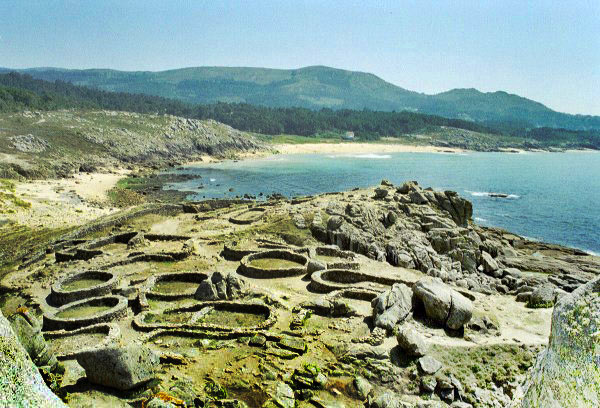
The Celtic tribe that was known as Gallaeci settled in the region during the Iron Age. They left behind castros which were fortified, Iron Age settlements which survived until after the arrival of the Romans.

Castros were fortified enclosures that were surrounded by ditches and walls. Inside they were circular stone dwellings with thatched roofs and were laid out in neighborhoods separated by streets and squares. If you visit Galicia, Spain you can see these castros.

The Celts did not have any written language.  Modern day Galicians speak Gallego which is a dialect related to Portuguese.

The wines that were paired with this history lesson were a Bouza do REI, 2015 Lagar de Bouza Albarino and a Adega Eidos, 2014 Eidos de Padrinan Albarino.

Bouza do REI is located in the heart of the Salnes valley between the estuaries of Arousa and Ponteverda.  This is the largest coastal plain in Galicia and one of the most fertile.  It is considered to be a historical sub-region of Albarino. The vines are grown on small hill 100 metres above sea level. This winery was one of the first wineries registered in the DO of Rias Baixas.

When I opened the Bouza do REI Albarino the nose reminded me of a Viognier.  Very floral, but then the smell of fresh ocean air came into play followed by some lemon peel. On the palate it was fresh, crisp, acidic with lemon citrus and a hint of stone fruit and passion fruit touched with wet stone. This wine retails for $16

Located at the foot of the hillside called Padrinan in the southern end of Salnes, Adega Eidos is a family winery that has been making wine in the Rias Baixas region since 1993.  In Padrinan there are many small vineyards that provide the winery with grapes.  They are a very boutique winery as production is only at 35,000 bottles from 25 acres of vineyards.

The 2014 Eidos de Padrinan Albarino reminded me a little of a Fume Blanc.  The nose was grassy hints of lemon peel, tangerine.  On the palate it was soft and rounder.  Not as much of a racy acidity as other Albarinos can be.  There was a little bitterness on the finish.  The retail price on this wine is $22.


Don't think I didn't pair this with anything.  I sauteed up some scallops with Windy Acre Farms greens and some of the Albarino. Yes, it was easy and delicious.


Tuesday, May 3, 2016

3 Take-Aways After A Month of Albarino

Every week in April I was amazed at the Albarino wine I tasted.  All unique, all similar yet very different.

The wines tasted in the program I am taking part in were 100% Albarino.( We are moving to Albarino blends in May, so more to come on this wonderful wine and wine region.) Some had more acid than others. Even the profile on each one was different. Some I liked more than others.  What I did realize from this first month of tastings is I like the acidity in the Albarino more than I like when it was toned down. Personal preference goes with personal wine making style..

Three take-aways from the past month:

  • Albarino is cold soaked. Before fermentation the grapes are cold soaked to bring out the more aromatic character and flavors of the grape. Sometimes the wine may be perceived as more fruit friendly and complex.  Albarino is usually cold soaked for a couple of days
  • Vintage wise it's best to drink Albarino one year after the vintage date.
  • Albarino will age 3-5 years


This week I tasted 2 very different Albarino wines and paired it with a pork roast. Very easy recipe...I put the pork roast in the pan with cut up potatoes, mushrooms, green pepper. Poured about 1/2 cup of Albarino (I used the Veiga Naum 2014) seasoned with garlic, parsley, fresh sage and tarragon from the garden, salt and pepper.  Baked at 400 for 40 minutes then at 325 for 1 hour.  

2014 Veiga Naum Albarino - Minerally with aromas of wet stone, white flowers, green apple and ocean spray.  A bit tart on the palate with citrus, green apple, lime, hint of stone fruit and a touch of salinity. It was a bit mellow and not as acidic as others.  Very food friendly. SRP $15

2014 ATTIS Xion Albarino - Very aromatic, minerally, dry and delish.  Complex aromas of pear, green apple, passion fruit, fill the glass.  You can taste the minerality of this wine along with green apple, pear combined with soft acidity and a touch of honey. Nice for the summer pool party. SRP 13.86

If you should happen to taste any of these wines please let me know your thoughts over on my Facebook page.  Would love to hear from you.


Tuesday, April 26, 2016

The Different Expressions of Albarino

We've been talking this month all about Albarino from the Rias Baixas region of Spain. The grape has many different expressions and that comes from a variety of influences; weather, terroir, winemaking style and if it's 100% Albarino or blended with other grapes. 

A  good example of the influences on a grape is the 2014 Castro Martin Albarino.  This Albarino is from the Salnes Valley region of Rias Baixas and it receives influence from the Atlantic Ocean. How apparent is that in the wine?  When I first smelled the wine, I thought I got an aroma of skunk. But when the plate of what you might smell and taste in the wine appeared (picture above) I realized after smelling the seaweed, that it was apparent that was the aroma I was getting. That is the Atlantic influence.  There was also aromas of lemon peel with lemon pith on the palate.  This is more of a food driven wine as when it was paired with aspargus it not only took out a lot of the seaweed, but brought out the saltiness of the ocean to the wine.  SRP $15

The 2015 Altos De ToronaAlbarino is actually a blend of 85% Albarino, 5% Loureiro, and 10% Caino Blanco.  This wine is from the O Rosal region of Rias Baixas and Caino Blanco is an indigenous grape to that region and blended into the wine.  This particular winery is located halfway up the mountain so the mist and the humidity of the valley doesn't affect the wine and it receives a lot of sunshine. This wine has a lot of complexity to it. Lot's of layers in both the aromas and on the palate. A bit of grass on the bouquet followed by citrus and tropical fruits. Bright acidity dances on your palate with nice minerality with apricot, peaches and a finsih of green apple. Once again when paired with asparagus it made it much softer on the mouth and less acidic. SRP $16

The affects of the weather and location show in both of these wines.  Where you have the ocean influence in one and the location of being halfway up a mountain on the other. Two wines, same grape although one was blended, two distinct different profiles.


Friday, April 22, 2016

To Sip or to Pair Albarino

This week in the land of Galicia, Spain we tasted two Albarino's that that were pretty different.  One I will call the sipper the other the pairing wine.

As I am learning, Albarino is quite the diverse wine and has many personalities.  For this pairing I happen to be in New York City the day before and stopped in at Murray's Cheese and picked up some cheese from Galicia and other parts of Spain along with Prosciutto. If you are in NYC, Murray's is in the Grand Central Market at Grand Central Station and on Bleeker Street. A must for the cheese lover.

I am going to first discuss the wines, then the food and the pairings.  Since Rias Baixas is known for it's seafood, I chose to make a scallop dish to pair with the two wines.  One wine actually paired much better than the other.

2014 Rectoral do Umia Vinabade - 100% Albarino grapes from the Salnes Valley where the soil is composed of  50% granite, 25% clay and 25% sandy and the birthplace of Albarino. The name Vinabade is reference to the monks that brought Albarino to the region. Golden in color with aromoas of pear and peach with a hint of green apple. The palate was full of lemon, pear, lime, hints of minerality and lemon pith on the finish. This wine was a bit mellow and not as acidic to the feel as others. Wine retails for $15

Senorio de Rubios Robalino - 100% Albarino grapes from the Condado area of Rias Baixas.  This area is named after the Tea River, is located in a mountainous area inland and is known for cottage cheese and honey.  The soils are granite and slate which attributes to the wet stone I got in the bouquet of the wine. The aromas from this wine were complex as wet stone, peach, grapefruit and hay filled the glass.  The palate was crisp and acidic with flavors of pear, citrus, lime. This wine retails for $18

I served three cheeses from Spain that we tasted each cheese with the wine.

Arzua Ulloa - Made on the banks of the Ulluo River in Galicia with milk from Rubia Gallega, Frisian and Alpine Brown cows. The cheese is aged for two weeks. It's a mild cheese.

Mahon Meloussa - Made in Minorca in the Balearic Islands. It contains 5% sheep milk and 95% cow's milk.It's a harder cheese, but soft, and has a sharpness to it.

Malvarosa - Produced from Guirra sheep, this cheese is rich and sweet and has a hint of butterscotch on the finish.

Since Galicia is known for it's seafood, I went and picked up some Cape May scallops and prepared them in a lemon marinade with basil and Proscuitto. Served them with couscous and aspargus with lemon and garlic.

What we found in the pairings is the Arzua Ulloa took away some of the acidity from the Robalino and made it softer, thus blending very well and the aspargus complimented the Robalino.
The Malvarosa cheese with the Vinabade was a marriage made in heaven. As my friend Jen said "best wine and cheese pairing I can remember". The Vinabade paired great with the scallops and the asparagus. Everyone was playing nice in your mouth. Nobody was bolder than the other and trying to take over.

Overall I think the Vinabade was the more food friendly wine of the two, while the Robalino is a great summer sipper.


Friday, April 15, 2016

Terroir and Albarino of Val do Salnes

You probably hear the word Terrior thrown around when discussing wine but what does it really mean?

Terroir is the environmental factors that will effect a wine. Each region will has different soil and even within a vineyard there can be different soils and micro climates. In the Rias Baixas region there are 9,000 acres of vines with more than 6,500 growers and 20,000 individual vineyard plots.

I am going to talk a little about the Terroir of the Val do Salnes region of Rias Baixas, Spain and what it brings to the wine.

The Val do Salnes is the birthplace of the Albarino grape and the oldest, coolest and wettest sub-region of Rias Baixas. The soil has a lot of granite in it and is rocky with alluvial top soil. Alluvial is loose soil or sediments which have been eroded by water and relocated in a non marine area.  The soils are also enriched in the traditional manner by digging in shells of local mollusk. Molluscs that you will be familiar with are snails, clams, mussels, squid and octopods. This gives the wine the minerality that you will taste in various degrees.


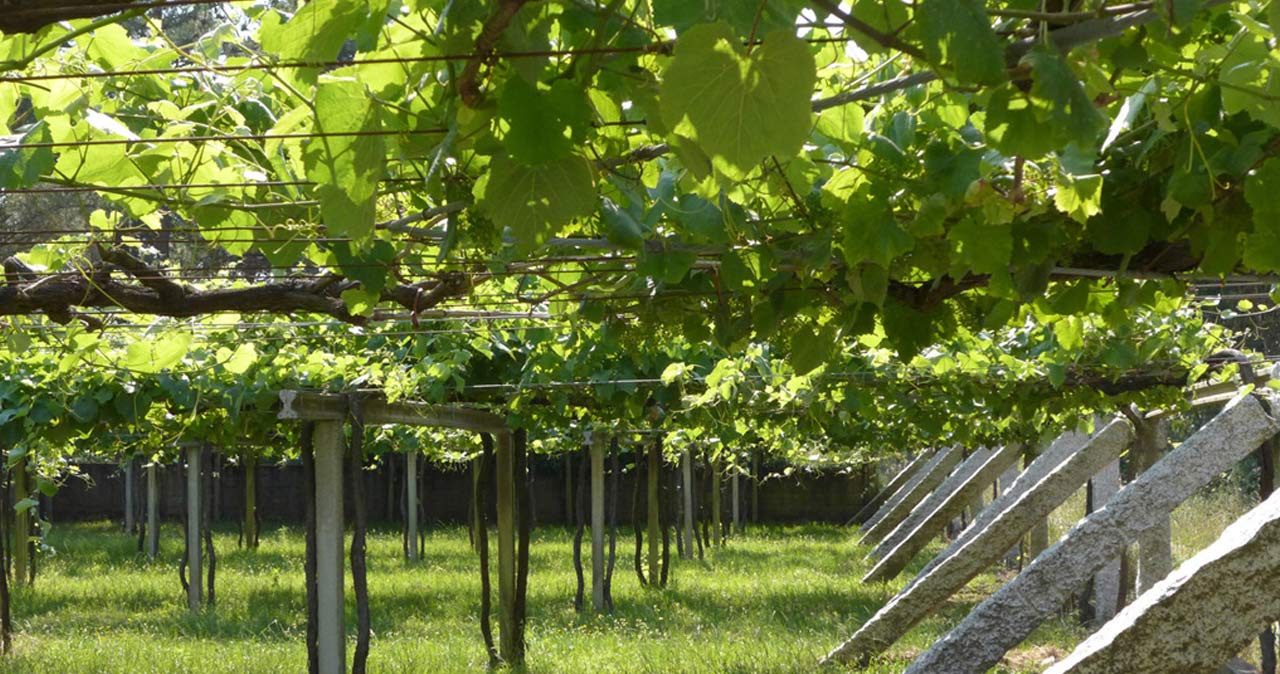
What I find interesting is their canopy management.  That is the way the vines grow and the grapes are exposed to the sun. What you are most custom to look at is vertical shoot positioning, where the vines kind of grow towards the sky and the grape clusters hang down.  Here they use the "emparrado" method which looking at it you would think it was a pergola.They are up to 7 feet high.

I have now set the scene for the wine.  The two wines I am going to talk about are in the sub-region of Val do Salnes around the town of Camdados.


2015 Gran Vinum Nessa Albarino  Located on the hillside overlooking the river Umia and the Ria de Arosa near Cambados, one sip and the words elegant and sexy came to mind.  Elegant like their 25 year old vines the wine had aromas full of minerals, and lime.  It was very fresh!  The palate was light and bright full of pear, wet rocks (minerality), nice acidity and a touch of orange on the finish. This is a great summer drinking wine and it retails for $17.  The suggested serving temperature is 54 degrees.

2014 Martin Codax Albarino - This winery is a co-op of 300+ growers/families who supply the grapes for the wine. The grapes come from very small plots that are under strict quality control. This Albarino was a bit different from the above. A little more mature. The first aroma to escape my glass were white flowers, then hints of straw and a mix of flint and citrus.  Flavors of tangerine on the palate followed by lime and a hint of pear with a slight bitterness on the finish.  This wine retails for $16.99

Don't think I didn't pair this with anything.  These two wines I paired with take-out mussels in a Red Thai Curry Sauce from 5 West Pub.  I probably should have gotten the oil and garlic but wanted to see how the Albarino would pair with the spice.  The Codax paired better with the mussels.  It had a bit more fruitiness to it so it mixed with the spice of the sauce better.

All in all two very good Albarinos I would look for in your liquor store or wine shop. Great for summer!

Thursday, April 7, 2016

All About Albarino - The Wine of Rias Baixas


How luck am I, for the next 2 months I will be learning all about the Rias Baixas region of Spain on Wine Studio's weekly educational program, It takes place on Twitter, Tuesday's at 9pm so feel free to follow along with the hashtag #winestudio and learn with me,

Rias Baixas is sometimes referred to as "Green Spain" and the grape that put them on the map is Albarino. Located in the Galicia region of northwestern Spain bordering the Atlantic Ocean and Portugal.  You might hear it referred to as "Green" Spain because of the lush green valleys they have due to the amount of rainfall that mainly occurs in the fall and winter.

You will find granite soil and because of the amount of rainfall the soil tends to crumble breaking the granite and turning it into sand. The coastal climate also has clay and silt in the soil that is deposited from the running waters.

Let's talk about the grape Albarino of which accounts for 96% of the wine production in Galicia.  It's a white wine that's a pale lemon in color, dry and aromatic.  Flavor profile is white peach, apricot, melon, pineapple, mango and honeysuckle.  They have nice acidity and minerality.

There are 5 sub-regions that grow Albarino and each of the regions terrior will contribute distinguishing characteristics to the wine.

  • Ribeira do Ulla - This sub-region's soil is mostly alluvial soil and it's located a bit inland.Wines here tend to have a more herbal characteristics.
  • Val do Salnes - This region is known as the birthplace of the Albarino grape. The soil here is granitic and rocky with alluvial topsoil.  It is also the coolest and wettest sub-region.  Here the wines will be crisp and the melon characteristic will be prominent. 
  • Soutomaior - This is the smallest sub-region and the soil is light and sandy over granite bedrock.
  • Condado do Tea - This region is named after the Tea River which is a tributary of the Mino River.  It is located in a mountainous area along the Mino and is the second largest sub-region.  It is inland and it's warmer and drier and can get very hot is the summer.  The soils are granite and slate. The Albarino's from this region tend to be less fruitier and earthy in style.
  • O Rosal - This region also sits along the Mino River but where it joins the Atlantic Ocean. With granite bedrock and alluvial topsoil the vineyards are terraced along the sides of the river. You'll find the Albarino's from this region to be softer in style with a more peachy profile. Also grown in this region is Loureiro and Caino Blanco which might be blended into the Albarino.  The Loureiro lends notes of laurel to the wine and the Caino Blanco gives it a bit of extra acidity.
The Galicia region is known for their fresh seafood. Lots of shellfish,  hake, tuna, monkfish, sea bass, sole, sardines and scallops.  The Albarino wine of the region pairs wonderfully with the catch of the day.  Albarino is also very versatile and will pair well with spicy Chinese, Indian and Thai because it's low in alcohol and ripe in fruit.

Join me on my journey through Rias Baixas as I learn about the region and their wines and share it with you.  Oh yes, there is wine tasting involved courtesy of the Riax Baixas Wine Region. Let's see what we'll be drinking this summer.