Showing posts with label Piedmont Italy. Show all posts

Thursday, April 21, 2022

Brachetto - Spring Sweetness and Bubbles


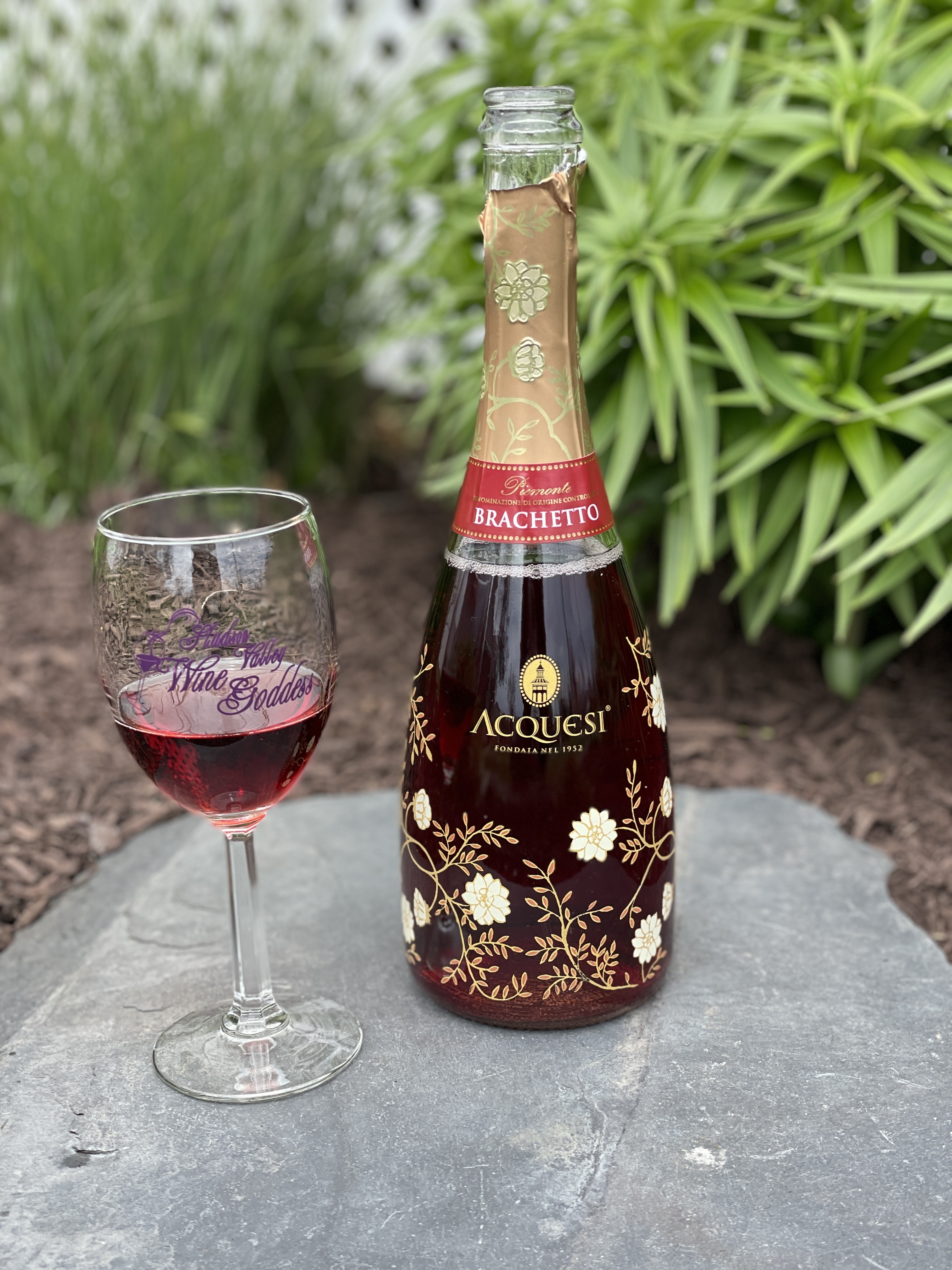
It’s Spring, and this bottle of Acquesi Brachetto says it all. Just looking at the beautiful design of the bottle makes me smile and think of warm weather and bubbles.


Brachetto is a black-skinned Italian grape grown in the Piedmont region of Italy. The grape is usually produced as sparkling wine and low in alcohol. Rules around making wine with this grape is the wine needs to be 100% Brachetto. For two days, the grapes are macerated (sit on the skins and seeds). During this time, the color and flavors are extracted from the grapes.


Brachetto does have a level of sweetness. If you like your wine on the sweeter side, you will like this. If you are looking for a nice wine with personality with your berry pie, strawberry shortcake or fruit cup, this is the wine for the pairing.


Acquesi Brachetto D’Acqui DOC $13.99


Tasting notes: Beautiful garnet red in color - fresh mountain sweetness on the nose with hints of strawberry, juicy red raspberry and lilacs. It is frizzante, so the bubbles are light.


The palate is sweet and bursting with red fruit with a hint of anise spice on the finish. Low in alcohol at only 6.5%


This wine will pair well with chocolate and berry desserts. Or as a Sunday afternoon sparkling at the beach or pool.

Tuesday, September 26, 2017

Winephabet Street D is for Dolcetto

Last Monday was the monthly edition of Winephabet Street and Lori and I strolled down D street and explored Dolcetto. Honestly, I haven't had many Dolchettos  so this was a great learning experience for me as well.

Dolchetto hails from the Piedmont region of Italy. There are seven DOC's and one DOCG.  It's one of the first grapes to be harvested in the region and with that, it has nice tannins and low acidity. Dolcetto is a wine that is meant to drink young, within 5 years of harvest.

For Winephabet Street, Lori and I each talk about two topics and we rotate each month.  This month I had Five Fun Facts, and the Characteristics of Dolcetto.  Lori took on the History and Food Pairings.  I didn't even look at Lori's information and made myself Jalapeno Popper Mac N Cheese for dinner and had it with my Dolcetto.  I wasn't expecting it to go well with the wine but it did.  I attributed it to the bacon, but actually one of the best food pairings for Dolcetto is Mac n Cheese. Who knew.


Lori and I don't live in the same area, she picked a Dolcetto di Dogliani and Paige from Boutique Wines & Spirits picked me out one from Dolcetto d'Alba. Both wines were under $20 from different areas of the region.  As you will see in the video, one wine had more purple hues and one was more garnet in color.

I hope you enjoy the video.  If you want the audio on the go, the podcast is below.  Don't forget to sign up for next month's Winephabet Street October 16. Sign up here http://snip.ly/jtqtk 
Cheers!  Thanks for watching!


Podcast:


*Boutique Wines & Spirit is the official wine store for Hudson Valley Wine Goddess

Tuesday, January 24, 2017

Italian Wine Classification – What Does it Mean?

When you are in the store purchase wine from Italy you see labels with DOCG, DOC, IGT and Vino de Tavola, what does it all mean? It’s the Italian wine classification system. Pretty much it dictates what grapes go in the bottle. Let’s take a look at each classification.
DOCG is the highest quality of wine under the Italian wine classification system. There are strict rules governing the production of wine that can carry this classification. There are certain permitted varieties, yield limits, how ripe the grape is when harvested all the way to the wine making procedures. The wine bottles all have a numbered government seal across the neck to prevent counterfeiting. Each region differs with what DOCG classification entails.
DOC is the main tier and there are 330 DOC areas with their own set of laws in their viticultural area. Laws that include the permitted grapes allowed and the wine style produced.
IGT was orginally introduced in 1992. Prior to that when winemakers wines failed to qualify for the DOC or DOCG status because of the grapes that the wine was made from, not from quality. These wines must be produced from at least 85% of the grape variety. This category has allowed producers to produce creative wines and allows then to export their product.
Vino da Tavola is the Italian classification for table wine. This is the most basic level of wine. It is the lowest on the classification system. These wines tend to be inexpensive and a blend of wines from different regions and at time different vintages.
Below find a wine from each category. Note there really isn’t a huge difference in price. All three were very good.
San Fereolo, Dogliani DOCG 2008 comes from the Piedmont region of Italy and is made with 100% Dolcetto. Winemaker Nicoletta Bocca delicately produces this wine from a small part of an ancient 1400 foot vineyard and 80 year old vines that sit on a hillside above the Piedmontese village of Dogliani. The grapes are fermented in large neutral Slavonian oak vats. You can smell the limestone soil as it shows in the nose as wet stone and hints of voilet. Intense flavors of anise, blackberry, pine resin and dark fruit show in the glass. This is a very powerful wine that knocked my socks off. As it opened it got softer and the fruit really began to shine with soft tannins and nice acidity.  SRP $30

Castello Di Magione Morcinaia Vendemmia DOC 20 08 from the Umbria region of Italy. This is a blend of 40% Cabernet Sauvignon, 40% Merlot and 20% Sangiovese. This wine is full of red and black fruit. Blackberry notes stand out with some earthy tones rounded out with some cherry. You get a bit of the acidity from the Sangiovese grapes and tannins that show this wine still has time to age. SRP $35
Le Boncie 2014 Toscana is a IGT classified wine estate bottled by Le Boncie in Castelnuovo Berardenga, Italy. This is a decent everyday wine.  Notes of black cherry, clove and vanilla escape from the glass. On my palate it was light and thin with flavors of black cherry and raspberry with some spice finish on the tip of my tongue.  The SRP is $23.

Thursday, January 28, 2016

2 Italian Wines: Compare and Contrast


What do you pair with two Italian wines, one a young Barbera and one a Dolcetto both from the Piedmont region of Italy?  Leftover Filet Mignon and Pasta.

Neither of these wines saw any oak.  All aged in stainless steel.  They both reacted differently to the dinner at hand.

Brangero 2012 Dolcetto di Diano D'Alba is made by third generation winemaker Marco. It had a hint of smokiness on the nose.  Also flavors of black cherry, blueberry and anise.  The palate was fruity and balanced with some tannins.  Flavors of red fruit and slight acidity. Goes very well with the pasta and tomato sauce

The wine tasted great with the cold Filet Mignon.  Also tried it with provolone and Locatelli cheese.  It mellowed out the sharpness on the provolone.

Roagna Barbera D'Alba 2014 is also produced by a Marco.  This wine has the potential to age for 5 years.Aromas coming from the bottle were full of cherry and blackberries. The palate was soft and silky full fo sour cherry,, strawberry and plum.

The wine paired very well with the Filet Mignon.  The wine rolls over the flavor of the sharp provolone but not the sharpness of the cheese.


Compare and Contrast:
  1. Both wines were made by a Marco
  2. Both wines come from the Piedmont region of Italy
  3. Both wines went very well with the Filet Mignon
  4. The Dolcetto paired better with the pasta
  5. The Dolcetto was a better food wine
  6. Both wines are priced around $18

Sunday, May 13, 2007

Wine Region - Piedmont, Italy

Piedmont, in Italian, means at the foot of the mountain. It was originally inhabited by Celtic tribes, which were later absorbed by the Romans. When Hannibal destroyed the Celtic capital, Taurasia, the Romans rebuilt it in the same location giving its streets the grid pattern that that still characterize Turin today.

The three best areas for wine tours in Piedmont (for scenery and quality of wines) are the Langhe, Roero and Monferrato sub regions. The principal city in Piedmont is Turin, a beautiful cosmopolitan city known for two main reasons- its superb chocolate makers, and for the "Shroud of Turin", which attracts Catholic pilgrims regularly.

With 46 different DOC and four DOCG areas, Piedmont is the region that produces the largest number of best known, noble, and world-appreciated prize-winning wines, such as Barbera, Barolo, Barbaresco, Dolcetto, Nebbiolo, Grignolino, Malvasia and Asti Spumante among others.

Another distinguished characteristic of Piedmont is that most of its wines are produced on family estates made up of relatively small parcels of land.

The main grape grown here is the distinguished Nebbiolo, which is the base for the famed Barolo, Barbaresco and Gattinara among others. Its name derives from the word nebbia, or fog, because of a velvety, whitish coating over its berries in addition to the fact that it grows in an area where, at ripening time in September, heavy morning fog is a given and the humidity that it provides gives the grapes an ideal habitat.