I don't think I will ever make it as a food critic. Although, I did enjoy eating out during Hudson Valley Restaurant Week, I think I put on 5+pounds. What I really enjoyed is going to new restaurants, trying different food and best of all, I didn't have to cook. I will touch on the restaurants and what I liked briefly.
We began the week dining at Crave with my freshman year college roommate who just moved to Poughkeepsie. Disappointed they didn't have any local wines on the menu, but they did have some selections from the Finger Lakes. I had a hard time deciding between the Short Ribs and the Lamb. The Short Ribs won and they were outstanding. Paul's Glenora Riesling Poached Pair won the best for presentation.
Then we tried a restaurant right down the road from us called The Villa. We haven't eaten here in years and it's so close. I was glad to see they had both Millbrook Winery and Whitecliff Winery on the menu. We ordered Whitecliff's Awosting White and my mom really enjoyed it. I will have to remember to purchase a few bottles for her. This was your typical Italian restaurant, but with a flare. They really tried to make an impression during restaurant week. Their homemade Ravioli was excellent! The cheese plate for dessert knocked us off our seat. The Mostarda on the Sprout Creek goat cheese was to die for. We will definetely be back.
Melanie wanted to go to the Melting Pot, so to make the experience real fun we invited my parents. We all had a great time. I won't go into detail because you can read my post from Monday about our experience
A restaurant I've been wanting to try for years..The Backyard Bistro in Montgomery. This lived up to all my expectations. The way the restaurant is situated you feel like you are going over to a friends for dinner and dining in their backyard. They had Whitecliff and Millbrook wines on the menu too. The food was outstanding! They gave us a 'special' appetizer to try, Duck Heart. Although I am sure it was good, I had to give mine to Paul. It's a mind over matter thing with me. The Sprout Creek Farm Camus Cheese and Polenta was great and there was a wide variety of choices for the main course. Once again I couldn't decide between Beef Shank and Lamb. I did choose the Lamb 3 Ways and it was delicious. The winning dessert was the White Chocolate & Coffee Semifreddo.
A drive out to Pine Plains landed us a the Stissing House. Pine Plains is a cute little town, I wish I had more time to explore it. I was glad to see they had Millbrook and Oak Summit wines on the menu. It's very rare we see one of John Bruno's wines on a wine list, so of course we ordered it. Paul had the Vegetarian Plate which he said was very good. I had the Horseradish Crusted Salmon which was a great choice for me since I've been eating a lot of red meat lately. For dessert I ordered the Flourless Chocolate Cake, but it looked and tasted more like Chocolate Molten Lava Cake which was heavenly.
I did get to eat lunch out one day at Cathryn's Tuscan Grill in Cold Spring. It's a half way point for my friend Catherine who lives in Westchester. We usually meet at Cathryn's for lunch every now and then, so it was a great excuse when we saw they were participating in Restaurant Week. The Pea Shoot salad was delightful. I ordered the Sweet Onion Crepe which was very good, while Catherine had Rabbit. I did taste it, it tasted like chicken. For dessert Catherine ordered the Sour Cherry Sorbet, that sounded good but the waitress cajoled me to try the Carmel Ice Cream with Sea Salt. I was a great choice!
The last restaurant stop was the Red Devon in Bangall, NY. Their wine list had Millbrook Wines on it, including their just released Tocai. Here I opted for the hand made Cavatelli which was tasty and the Lamb with Gnocci. The lamb was so tender! Paul actually didn't order off the RW menu and he ordered the Beef Bourguignon which he said was outstanding! I think it was better than my Bourguignon...that's okay.
Overall I had a wonderful two weeks of dining out. We ate at some outstanding local restaurants. We will be visiting these restaurants again, you can count on it!

Thursday, March 31, 2011


Wednesday, March 30, 2011
Hudson Valley Wine History - The Red Varietals
 |
| Benmarl Winery, Baco Noir |
Now we are going to look at some of the red varietals that are grown in the Hudson Valley. I am going to concentrate on the French - American hybrids but will also touch on some hybrids recently released. So no talk of Cabernet Franc or Merlot today.
Baco Noir - This species of grapes has early bud break. The fruit is usually high in acid and produces wine that is deeply pigmented, but low in tannin. At times it tends to have a smoky taste towards the finish. Wine made from Baco can age quite a bit. Three years ago I had the opportunity to taste a 1996 Baco grown in the Hudson Valley and it was very good. If you like the wine you are tasting made from Baco Noir grapes, purchase one for today and cellar another bottle for a later date.
Chambourcin - This varietal is a late ripening grape. It is winter hardy and can withstand cold temperatures, but not for a long time. Chambourcin produces a soft dark red wine with a peppery flavor, and not to heavy.
DeChaunac - This is an early ripening grape that is fruity. It has good disease resistance to powdery and downy mildew which is common in the Hudson Valley. It is a deeply colored red wine with light to medium body. You will find characteristics flavors of leather, cinnamon and chocolate. You will also find elements in the wine such as red cherries, prunes and blackberries. It might also have a musty, mushroom like flavor hiding in the background. Wine produced from this grape is best to drink within 3 to 6 years.
Frontenac - This is a fairly new varietal that was released from the University of Minnesota in 1996. It is cold hardy and once again resistant to downy mildew and Botrytis bunch rot. At harvest you will see high sugar and acidity levels. The wine produced from this varietal will have a deep garnet color with cherry aroma and you will find flavors of blackberry, black currant and plum.
Marechal Foch (Foch) - Named after Marshal Ferdinand Foch who served as Allied Supreme Commander of the British, French and American armies in France during WWI. This grape has Gamay origins and is an early ripening black grape that produces a fruity light red wine.
Noiret - Wine produced with this grape is a deep rich almost purple color with notes of raspberry, blackberry some mint and green and black pepper. Watch out, this wine will give you purple teeth.
Monday, March 28, 2011
The Melting Pot Experience
During Restaurant Week my daughter suggested we go to Melting Pot at the Poughkeepsie Galleria. She really enjoys the restaurant. It's nice with more people so we invited my parents to join us. My dad complains because he has to cook his own food, I told him that's the fun of it.
The first thing I do these days when dining out is look at the wine list to see if they have any Hudson Valley wine then New York State wine. This Melting Pot has a little from each region, Long Island, Hudson Valley and Finger Lakes. From the Hudson Valley they had Brotherhood's Riesling; from the Finger Lakes they had Riesling from Fox Run and Heron Hill, Gewurztraminer from Dr. Frank, White "Signature from Glenora; from Long Island they had Chardonnay from Palmer and Pindar. Paul and I opted for the Palmer "Reserve" Chardonnay which was very nicely balanced and went very well with the cheese fondue.
I think Paul was going to go the healthy route and get a salad, but we shamed him into getting the Restaurant Week menu. James our server who was a CIA grad started us with a pot of the Cheddar Fondue and the Spinach Artichoke Cheese Fondue. Both were very good. For dinner, we ordered Teriyaki Marinated Sirlion and Chicken Provencal and White Shrimp. Dinner comes complete with Rescue Spoons for when you lose your veggies in the pot. To cook dinner our dinner we opted for one pot of Coq au Vin and one pot of Mojo. Unfortunately the server forgot to tell us there was a $5 charge for each so mom was a little annoyed.
Then came dessert. We had our choice of milk, dark and white chocolate fondue. I wanted the white, but lost out to the milk and dark. It didn't matter, it was delicious! Not for the diabetic at heart (dad, who's blood sugar must have been through the roof the next day) I enjoyed the strawberries, cheesecake and pound cake in the chocolate.
A little tip our wonderful server James told us. When you order the three course meals and don't have room for dessert, they'll give you a rain check so you can come back and have your dessert.
The first thing I do these days when dining out is look at the wine list to see if they have any Hudson Valley wine then New York State wine. This Melting Pot has a little from each region, Long Island, Hudson Valley and Finger Lakes. From the Hudson Valley they had Brotherhood's Riesling; from the Finger Lakes they had Riesling from Fox Run and Heron Hill, Gewurztraminer from Dr. Frank, White "Signature from Glenora; from Long Island they had Chardonnay from Palmer and Pindar. Paul and I opted for the Palmer "Reserve" Chardonnay which was very nicely balanced and went very well with the cheese fondue.
I think Paul was going to go the healthy route and get a salad, but we shamed him into getting the Restaurant Week menu. James our server who was a CIA grad started us with a pot of the Cheddar Fondue and the Spinach Artichoke Cheese Fondue. Both were very good. For dinner, we ordered Teriyaki Marinated Sirlion and Chicken Provencal and White Shrimp. Dinner comes complete with Rescue Spoons for when you lose your veggies in the pot. To cook dinner our dinner we opted for one pot of Coq au Vin and one pot of Mojo. Unfortunately the server forgot to tell us there was a $5 charge for each so mom was a little annoyed.
Then came dessert. We had our choice of milk, dark and white chocolate fondue. I wanted the white, but lost out to the milk and dark. It didn't matter, it was delicious! Not for the diabetic at heart (dad, who's blood sugar must have been through the roof the next day) I enjoyed the strawberries, cheesecake and pound cake in the chocolate.
A little tip our wonderful server James told us. When you order the three course meals and don't have room for dessert, they'll give you a rain check so you can come back and have your dessert.
Thursday, March 24, 2011
Benmarl Rose

This Rose was a beautiful salmon color and just sparkled in the daylight. It is a blend of Cabernet Franc from the Hudson Valley and Finger Lakes along with some Merlot from Long Island.
The bouquet was crisp and clean with fruity watermelon, hint of floral and a little musty aroma hiding in the back.
On the palate I got strong orange peel mellowing away to cranberry. The mid palate was a strong citrus lime. There was a hint of dried mushroom hiding in the back of the wine with a quick finish.
This wine was very enjoyable and a wonderful way to welcome in spring.
Wednesday, March 23, 2011
Hudson Valley Wine History - The White Varietals
 |
| Cayuga White picked at Fino Farms for Whitecliff Vineyards |
I am going to touch on grapes and their characteristics grown in the region that are not names you hear every day like Chardonnay or Merlot.
We will begin with the white varietals such as Seyval and Traminette.
Cayuga White - A hybrid cross between the Schuyler and Seyval Blanc grapes. This makes a fruity white wine.Cayuga White is winter hardy and disease resistant which makes the Hudson Valley a region for plantings.
Seyval Blanc - one of my favorite whites grown in the valley. Very similar characteristics to a Sauvignon Blanc it has aromas of green apples, citrus and melons.
Vidal Blanc - a high acid French-American hybrid white wine grape with fruity, floral flavors and good balance. You will also find hints of pineapple, melon, hazelnuts, pears and orange blossoms.This grape also makes a nice Ice Wine with Rhine qualities. The grape is descended from the Ugni Blanc of France
Vignoles - This grape can me made dry or sweet. Usually you will find citrus notes in the aroma. You might find tartness of green apples or flavors of apricots, pineapples, honey peaches or orange rind depending if it's dry or made sweet. Bud break on the Vignoles is usually late, so they tend survive a late spring frost.
Traminette - another one of my favorites grown in the region. This varietal is fairly new and was released in 1996 for planting. This grape is a Gewurztraminer hybrid. You will find lychee notes similar to Gewurztraminer in this wine.
Monday, March 21, 2011
Tasting J Vineyards 2006 Nicole's Vineyard Pinot Noir

The fruit for this wine was harvested from selected vines of Nicole’s Vineyard – J Vineyards & Winery’s crown jewel hillside Pinot Noir parcel overlooking the Russian River Valley. This 100% Pinot Noir vineyard is comprised primarily of clone 777, as well as 16, 113, 115, 667, Rochioli and Pommard. The soil in this vineyard is an Arbuckle series and uplifted river material.
From my tasting notes: on the nose it had a bouquet of strawberry, red raspberry and a hint of clove. In the mouth it was very berry. Red raspberry, blackberry with a mocha finish. The wine was smooth and very nicely balanced.
Thursday, March 17, 2011
Corned Beef and Vidal Blanc

In the crock pot place your rinsed off corned beef and any veggies you might want. I usually add onions, cabbage and carrots. Add a bottle of Stoutridge Vidal Blanc. For the seasonings I use a disposal tea bag filter and add about 10 whole cloves, garlic, bay leaf, 10 peppercorns, pinch coriander seeds and10 mustard seeds. Let it cook for about 8 hours on low and you will have a nice dinner when you return. Serve it with pint of Guinness.
Wednesday, March 16, 2011
WBW 71 “Rhones Not From The Rhône.”

Lately I've been drinking quite a bit of Viognier from California. It would be real easy for me to choose this varietal but I am not going to. I will stay in the same state, but instead I am going to introduce you to Mayo Family Winery 2008 Sonoma Valley, Judge Family Vineyard, Jeffrey's Cuvee Grenache We visited this winery in October when we were in Sonoma and had the wine shipped home.
When we stopped at the winery, it was late in the day and we had just come from Bennett Valley which is where this Grenache was grown. In a conversation with the Max who was pouring for us, it turns out he went to the CIA in Hyde Park, NY and worked for a bit at Millbrook Winery. What a small world.

This Grenache was harvested in late October so the grapes could reach their full maturity. There was 216 cases made.
Monday, March 14, 2011
Hudson Valley Wine History - The Wineries
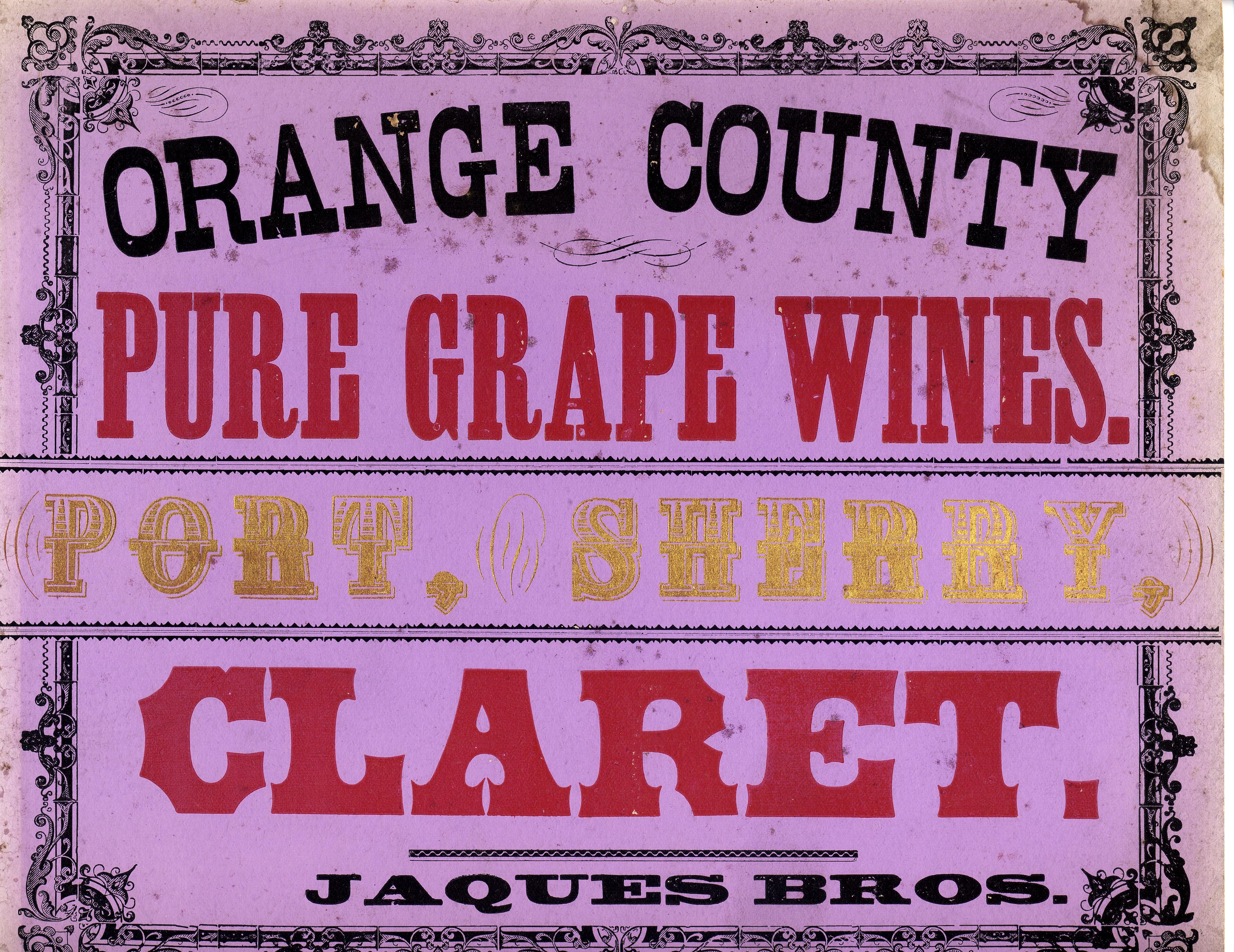 The first commercial winery in the Hudson Valley, Jacques Brothers Winery, was established in 1837 for the production of altar wines. Renamed Brotherhood in 1885, the Washingtonville winery is the nation’s oldest continuously operated winery.
In 1804 Croton Point was purchased by a Quaker gentleman named Robert Underhill along with his brothers Joshua and Abraham, they operated a grist mill on the Croton River and began to cultivate vineyards on the southern slopes of the point. After the death of Robert his two sons Dr Richard and William divided the property. Although a trained doctor Dr. Richard gave up his practice in NYC and became one of the leading agriculturalists in the country and the producer of Croton Point Wine. Dr. Underhill carried on numerous agricultural experiments and at one point developed a yellowish green grape which came to be known as the Croton Grape. In spite of the high quality of the fruit and its valued flavor for wine it did not become a popular grape because the vine was difficult to grow except in a certain type of sandy soil. The fruit was first exhibited by Stephen Underhill, nephew of Dr. Richard, in 1868. They did establish a winery in 1850, which was the region’s second winery. By 1873 the vineyards had fallen into decline as the family turned its interest to the local brick industry. The wines remaining in the vaults were sold to Thurber & Co. of New York. Although there is no longer a winery there, the subterranean brick caves built by the founders to store and age their wines are still in existence. The area, in the village of Croton-on-Hudson, is now a Westchester County park.
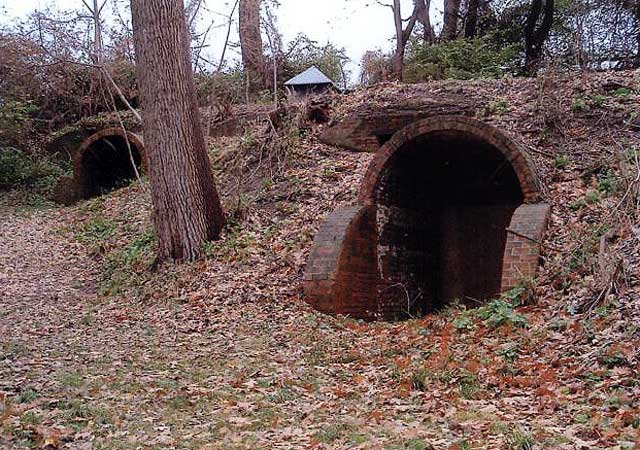 | |
| Underhill Wine Cellars, Croton Point. Photo by Brickcollecting. com |
The third winery, also named Brotherhood, operated in Amenia in Dutchess County from 1860-1867, when it moved out of the region.
The Hudson Valley Wine Company was opened in Highland (Ulster County) in 1904 by Alphonso Bolognese. The company made altar wines for local monasteries and then became Regent Champagne Cellars. Regent Champagne Cellers has since closed it’s doors.
High Tor Vineyards, which operated on a scenic mountain site in Rockland County back in 1949, was one of the east’s most prominent wineries. Its owner, Everett Crosby, tried to get New York to change its laws and do away with the expensive $1,000-per-year licensing fee. He was unsuccessful and he sold his vineyards in the early 70's.
In the 1970s, New York Governor Hugh Carey appointed John Dyson as state Commissioner of Agriculture.
A wine enthusiast himself (he currently owns Millbrook Vineyards in Dutchess County), Dyson formed a
task force that drew up the Farm Winery Bill. With testimony from Benmarl Vineyards owner Mark Miller
and support from many other vintners and organizations, the bill was passed in 1976, paving the way for
rapid growth of the Hudson Valley wine industry. Annual fees were dropped to $125, making the endeavor
easier to afford for the smaller wine-makers.
Today the Hudson River Region, given this name in 1982 by the Bureau of Alcohol, Tobacco and Firearms,
has more than 25 operating wineries.
Thursday, March 10, 2011
Hudson Valley Restaurant Week - Where Will You Dine?
 March is upon us and it's time for the 5th annual Hudson Valley Restaurant Week. This year Restaurant Week will begin Monday, March 14 and run through Sunday, March 27. There are over 160 restaurants across 7 counties participating throughout the Hudson Valley.
Hudson Valley Restaurant Week is the brain child of Janet Crawshaw publisher of The Valley Table Magazine. "The Hudson Valley enjoys a vibrant food scene," said Crawshaw. "The region is a nationally recognized center for food and agriculture and home to the country's foremost cooking school, celebrated artisanal cheese makers, world-class wineries and distiilleries and some of the best chefs in America.
Restaurant week guests will be able to choose a three course lunch or dinner. The cost for lunch is $20 and dinner is $28. Choice will include one appetizer, one entree and one dessert. Beverage, tax and gratuities are not included. Restaurant Week is about the Hudson Valley as a culinary destination. Many of the restaurants will be using ingredients sourced from local farms and serving wine produced in New York State.
I had the opportunity to attend the launch party on March 1st at Harvest on Hudson. This is where the chefs and sponsors get together to network and discuss the upcoming event. Kevin Zraly made some good points when he spoke to the crowd. Kevin said "Restaurant = Restore. There is a lot of history and tradition working together. This is the time for people in the Hudson Valley to get out, enjoy, have some good food and wine and restore their spirit!"
I couldn't agree more! I think I will be dining at Crave, The Villa, Stissing House and Red Devon. To see a complete list and their menus visit Hudson Valley Restaurant Week.
Wednesday, March 9, 2011
Hudson Valley Wine History - Viticulture Characteristics
The Hudson River Wine Region is referred to as the most complex geological regions of the world. Located parallel to northern Spain, southern France and central Italy, warm ocean breezes extend the growing season to between 180 – 196 days.
The steep Palisades are an important conduit of this maritime air and weather generated by the Atlantic Ocean.
The Hudson River is a tidal estuary, which expanse serves a dual purpose. The flowing water helps keep the climate temperate, and the valley serves as a conduit for maritime breezes from the south.
Glacial deposits of shale, slate, schist and limestone form the soil throughout the region, which
is in a geological division known as Taconic Province.
Monday, March 7, 2011
Blending Experiment

 Michael Migliore invited me and Paul over to do some wine blending. The wine on the blending table was Cabernet Franc, Merlot, Petit Verdot and Malbec. We later added Gamay Noir and Pinot Noir to the table. The mission for the day was to see if the varietal stood up on it's own or was better blended with another varietal.
 First we began with a taste of the Riesling that was blended a day or two ago. It was unfined and unfiltered, so looks were a little cloudy. The taste was pear with an orange peel finish. Looking forward to that release.
For each of these wines, we tasted the wine on it's own and then with some blending to determine which blend if needed was what would be bottled.
Merlot Experiment:

- On it's own it had a very berry nose with new oak. Berry
- Blended with 2% Petit Verdot - not to much difference. You got a little bitterness on the finish. The berry was toned down.
- Blended with 9% Cab Franc, 2% Petit Verdot - Nose of Cab Franc. The Cab Franc overpowered the wine.
- The winner - 98% Merlot 2% Petit Verdot
- On it's own - WOW! This is a wonderful wine. Fresh berry spice, smooth, wonderful black pepper finish.
- Blended with 3% Petit Verdot - Brightened the color on the purple hue. Softened the Cab Franc and the flavors associated with it
- Blended with 12% Merlot, 3% Petit Verdot - no notes on this because I really liked it on it's own
- The winner - Cabernet Franc on it's own. It is going to be a wonderful wine.
 Malbec Experiment:
- On it's own - Houston we have a problem - Sauerkraut. I taste sauerkraut, not good, this means bacteria attacked some of the chemical compounds in the barrel, lactic acid in this case causing the sauerkraut smell. Off to the barrel room to take a sample from another barrel and to mark the barrel this sample came from.
- New sample - 100% Malbec had a bland nose.
- Blended with 4% Petit Verdot - great nose, nice finish
- Blended with 7.5% Petit Verdot - to much Petit Verdot, lost the Malbec
- Blended with 4% Merlot, 4% Petit Verdot - Merlot nose and a fruity finish
- The winner - 96% Malbec 4% Petit Verdot
 The Pinot Noir and Gamay Noir were blended with 4% and 3% Merlot respectively and it was determined that they both held their own without any blending.
It was a great harvest last year. The fruit really holds its own.
Thursday, March 3, 2011
Hudson Valley Wine History
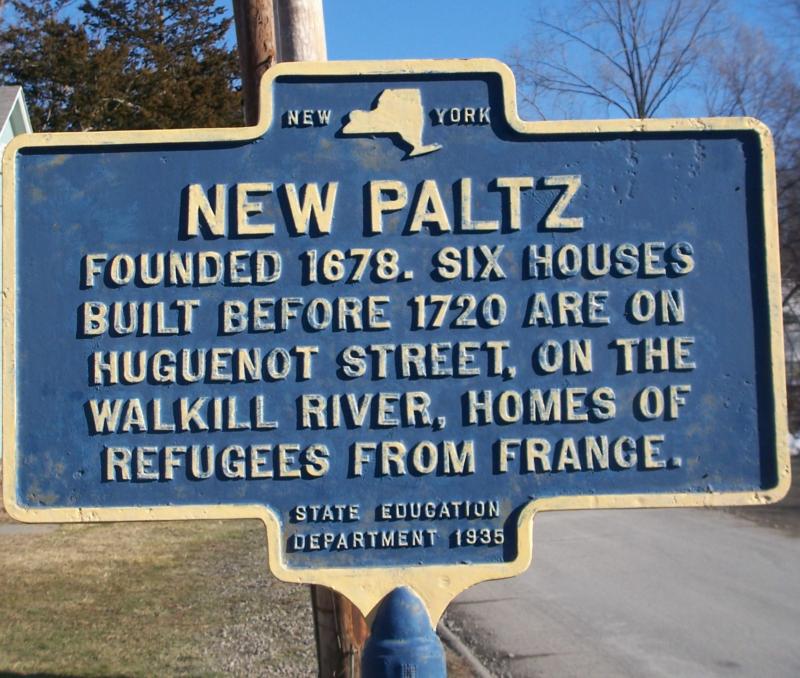
The time period 1677, The French Huguenots arrived in New Paltz from France and planted the first vines. This was at least 100 years before any vines were planted in what is now California. When the Huguenots planted the vines in the Valley they discovered a unique combination of soil, climate and sun that together makes for ideal grape growing conditions. Originally planting their vines on the hillsides of the Hudson Highlands they started a tradition of grapes and wine that continues to this day.
Wednesday, March 2, 2011
Disappointing Dining Series

It's a good thing the CIA called to confirm dinner because she told me it began at 6:30 in the Escoffier Restaurant. Hmm...I thought, no lecture. Nope.
We arrived and got seated and were poured a glass of Blanc de Blancs, Cremant d'Alsace, Lucien Albrect, NV. It's made from 100% Pinot Blanc. I must say, it was very good and went well with the Escargot. Yes, I did eat the Escargot. If my cell phone hadn't died, I would have a picture for you. This is the first time I've eaten Escargot and just like the waiter said, the taste / texture was like mussels. Will I order them again, not sure, it's a mind over matter issue with me.
The next course was Salmon in bacon batter. Very good, but no wine pairing. A Chardonnay or Chenin Blanc would have went well here. Then the main course...Boeuf Bourguignon served with a skimpy pour (maybe 2 ounces) of 2007 Bouchard Pere et Fils, Burgundy Pinot Noir. It wasn't like they were pouring $50 wine here. $20 max retail.
I was disappointed that there was no lecture, because it's always interesting listening about the region, the terrior and the wine. I was disappointed that there was only 2 wine pairings. I thought for sure there would be a Riesling from Alsace. But the real disappointment was with dessert! Crepes with poached pears. When I've had crepes they have always been warm. These crepes were cold and doughy. It looked like they rolled out and cut a circle for the crepe, filled it, rolled the crepe like a burrito and made it look pretty. I'm telling you it was raw pie dough. After two bites and dissection of a piece I put it aside. Then I moved to my tea...I had ordered Chamomile Tea. When I was in the American Bounty last month, the tea came in a tea pot brewing with the loose flowering tea leaves. In the Escoffier Restaurant I received a wrinkled packet of Lipton Chamomile Tea. It looked like it was taken from the waiters pocket. A nice sachet of Harney and Sons Tea would have matched the quality of the restaurant. I would have expected a Lipton tea bag from the Apple Pie Bakery, but not the Escoffier Room.
Needless to say, I was a bit disappointed with this dinner. It really takes something away from the experience when you don't have the lecture too.
Subscribe to:
Posts (Atom)