Matt Spaccarelli of Benmarl Winery uses a aerometer to measure brix levels in processing Seyval

Wednesday, September 30, 2009


Monday, September 28, 2009
Hudson Valley loses a Wine Visionary
 It's with great sadness I write this blog entry. Ben Feder, owner and winemaker of Clinton Vineyards passed away on September 24, 2009 after a battle with cancer.
Over the past two years I have gotten to know Ben along with his wife Phyllis. Ben was a charming, loving man who always had a smile on his face. It is that smile and upbeat personality that will be my memory of him.
Ben wasn't always a winemaker. In fact, he was a city boy, a graphic artist and book designer in New York City, by trade. In 1969 he purchased a rundown 100 acre dairy farm in Clinton Corners, NY. At first the cows and Ben didn't hit it off. Ben who was always intrigued by winemaking sought advice from winemaker Herman Wiemer, who at the time made wine for Walter S. Taylor at Bully Hill Vineyard. Herman's advice to Ben was to grow Seyval Blanc. Ben took Herman's advice and the cows left the pasture and the grapes were planted. In 1977 Ben had his first vintage.
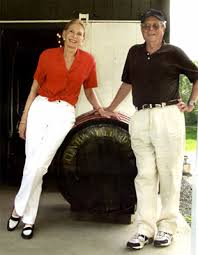 Ben who had previously been married twice before, married the love of his life, Phyllis Flood on June 23, 1989. They just celebrated their 20 year anniversary.
This past June the Hudson Valley Wine & Grape Association honored Ben with the "Hudson Valley Viritas Award" for his lifetime achievement for visionary leadership in Hudson Valley Winemaking.What an honor it was to see Ben so happy and surrounded by his friends and family.

My thoughts and prayers go out the Feder family. Ben will be missed, but his vision will live on.
Thursday, September 24, 2009
Processing Seyval with a Floatclear
This past weekend Whitecliff Vineyards harvested Seyval. Seyval is the main ingredient in their signature wine "Awosting White." This year they purchased a floatclear which makes the process go a bit quicker as you will see explained in the video below.
Wednesday, September 23, 2009
Harvest Report Update
 It seems that the Hudson Valley fruit seems has higher brix during this harvest season than the other wine regions like the Finger Lakes and Long Island. Thoughts are this is a reflection of the heat in the valley. Not sure if I go for that. It's been a strange and difficult growing season.
As you can see in the above picutre, the nets are up to keep away birds and deer. Sometimes they get to the grapes before anyone else. Not good.
In the Hudson Valley, Cab Franc brix are about 16.7, Chardonnay about 15, Fosh at 21.6, Merlot 16.9, Noiret 16.7, Pinot Noir 18.5, Riesling 17.4, but 16.1 in the northern part of the region, Seyval 18.8. These readings are from last week.
The grapes seem to be coming around. Different parts of the region experience different weather patterns. Growers will be picking when they feel their grapes are at the bix level suited for them. Hopefully we will still have warm days and cool nights. Who knows with Mother Nature, she has a mind of her own.
Monday, September 21, 2009
Processing Nectarines for a new wine
 Marc Stopkie owner/winemaker of Adair Vineyards is known for his Peche wine, made from Hudson Valley white peaches. In fact, his Peche had the highest score at this years Hudson Valley Wine Competition. The creation of the Peche was an experiment. It began a while ago when a orchard had some weather damage to their peach crop and they couldn't sell the peaches at market. They asked Marc if he would like to purchase some and try to make a peach wine. Hence, the birth of Peche. Marc tells me it's the Peche is the most popular wine in the tasting room. Every year Marc purchases 2 tons of peaches and produces his Peche which is sold in 375 ML bottles.
This year has been a tough year for the Hudson Valley in regards to weather. We've had lots of rain as well has localized hail all throughout the spring and summer. It seems that the same orchard which Marc purchases his peaches from suffered damaging hail to their nectarine crop and asked Marc if he would like to try to make a nectarine wine. Since this is how the Peche was born, why not.
 Processing a stone fruit wine takes time. First the pit is removed by hand from the fruit. Marc explained that there are machines that do this task, but he prefers to do it himself. After the pit is removed, it is necessary to remove the little brown nob where the fruit was attached to the tree. Believe it or not that little nob thing contains arsenic. Wouldn't want any casualties associated with your wine.
 Next Marc brings the fruit to his crusher. It is now all hand crushed before being put in the fermentation tanks.
 Marc then adds a late harvest yeast to the nectarines and the magic begins...fermentation. This year he will make about 120 cases of the Nectarine Wine which still doesn't have a name. He hopes the wine will be ready in early December.
 After we were finished with the nectarines, the crew started on the peaches. To view more pictures from the day of processing Nectarines click here.
I leave you with a video I put together. By no means am I a videographer, but I try my best.
Wednesday, September 16, 2009
WBW #61 - Hudson Valley Wine Goddess in New Jersey?
As Wine Blogging Wednesday is announced, Lenn Thompson, founder and creator of WBW asked all of us to visit a winery in your neighborhood. Special points with a winemaker or vineyard manager.
Well, I thought, I frequent the wineries in the Hudson Valley and have tasted wines in all the tasting rooms, chatted with winemakers, vineyard managers and owners. Some of my conversations can be found on Hudson Valley Wine TV. How can I make this different and in 3 weeks of which are very busy. A trip to the shore, Labor Day BBQ's, then I worked the Hudson Valley Wine Fest. No time for vineyard hopping.

However, there are two wineries & vineyards located just around the corner from our house in Cape May, New Jersey. Cape May Winery which I have visited in the past and Turdo Vineyards which I always want to stop at, however, when we come back from the beach they are closed. So although my WBW #61 isn't going to take you to a winery in my hometown backyard of the Hudson Valley, it is going to take you to my vacation home backyard, Cape May, New Jersey.
 On August 27 I met with Sal Turdo, owner and winemaker of Turdo Vineyards in Cape May, New Jersey. Sal purchased the 5 acres of land in 1998 and planted vines in 1999. It was his retirement plan and dream. Retirement is 3 years away for Sal who during the week is an electrical inspector in North Jersey, but on the weekends you will find him as winemaker in South Jersey. His 5 acres of land is home to 6000 vines which produces 1000 cases annually. Turdo Vineyards is a family affair. Sal, his wife Sarah and son Luca all work in the vineyard and winery.
Sal, born in Sicily, his passion for Italian wines is what you will find planted in his vineyard. Varietals he grows are Nero D'Avola, Barbera, Cabernet Sauvignon, Merlot, Nebiolo, Pinot Noir, Sangiovese, Syrah, Sauvignon Blanc, Chardonnay, Pinot Grigio, Dolcetto, Moscato and Rosato. The Nero D'Acola is one of Italy's most indigenous grapes and he brought the vines from Sicily to plant in his vineyard.
 When Sal planted his vineyard back in 1999, he did so by grafting. When you graft, you only lose one growing season as the vines will produce fruit the following year to be used in the production of wine, Sal explained to me. This is much easier than waiting 4 years after planting young vines. Sal told me he had produced Cabernet Franc. It wasn't a big seller in the tasting room, so he pulled those vines, grafted new vines onto the root stock and 1 year later was making wine from those grapes. Sal has an 86% success rate in grafting. Harvesting of the grapes is not done by brix explains Sal. "It's in the seeds. When the seeds are brown, that's when the grapes have the best flavor and are harvested."
Turdo releases their wines in May, by late summer they are sold out of most wines. He does take orders for futures, from the looks of it, it's the way most of his wine is sold. In the tasting room I made some friends; Karen & Matthew Loing and Lynda. I had a wonderful time tasting wines with them and their beautiful baby, who I might add, slept through the entire tasting to wake at the conclusion. Perfect timing!
What we tasted. I should say, what they weren't sold out of. We began with a 2006 and then a 2007 Sauvignon Blanc. I prefered the 2007 Sauvignon Blanc. It had a nice nose of melons and citrus fruit and was nice and crisp. He had two Chardonnays that we tasted. The 2006 Chardonnay was stainless steel fermented, no oak. It was crisp and dry. The 2007 Chardonnay was fermented and aged in French oak for 6 months. This wine had hints of soft oak on nose. It had a very long finish that stayed with you for a while. It was a finish of vanilla and soft spice.
I am not a big Rose fan, but I must say, Sal's 2008 Rosato is quite good. Made from Merlot grapes this wine was dry with a wonderful nose of red berries. Fruity flavors of raspberry, strawberry and hint of watermelon on the taste.
As we wind down the tasting, none of the Italian Reds were available. I did taste the 2007 Cabernet Sauvignon which had a wonderful nose of black cherry. This wine was nicely balanced. We ended the tasting with the 2008 Moscato. I must confess, as Sal took me through the vineyard he allowed me to taste the Moscato grape. Not one, but a cluster. I can't begin to describe to you the sweetness of these grapes, and the burst of flavor you get with each of them. Yes, I ate the cluster one at a time. Yum! The Moscato Dessert Wine had a wonderful aromatic nose of peaches and almonds. Yes it was sweet, well balanced, silky and sexy. Sarah brought us over some Lady Fingers to eat with the Moscato and WOW, did the combination really bring out the flavor of the wine.
I would like to thank Sal and Sarah for sharing their time with me. They have a wonderful vineyard and winery! If you find yourself in the Cape May, New Jersey area, do stop by the tasting room. It's not to be missed!
Well, I thought, I frequent the wineries in the Hudson Valley and have tasted wines in all the tasting rooms, chatted with winemakers, vineyard managers and owners. Some of my conversations can be found on Hudson Valley Wine TV. How can I make this different and in 3 weeks of which are very busy. A trip to the shore, Labor Day BBQ's, then I worked the Hudson Valley Wine Fest. No time for vineyard hopping.

However, there are two wineries & vineyards located just around the corner from our house in Cape May, New Jersey. Cape May Winery which I have visited in the past and Turdo Vineyards which I always want to stop at, however, when we come back from the beach they are closed. So although my WBW #61 isn't going to take you to a winery in my hometown backyard of the Hudson Valley, it is going to take you to my vacation home backyard, Cape May, New Jersey.
 On August 27 I met with Sal Turdo, owner and winemaker of Turdo Vineyards in Cape May, New Jersey. Sal purchased the 5 acres of land in 1998 and planted vines in 1999. It was his retirement plan and dream. Retirement is 3 years away for Sal who during the week is an electrical inspector in North Jersey, but on the weekends you will find him as winemaker in South Jersey. His 5 acres of land is home to 6000 vines which produces 1000 cases annually. Turdo Vineyards is a family affair. Sal, his wife Sarah and son Luca all work in the vineyard and winery.
Sal, born in Sicily, his passion for Italian wines is what you will find planted in his vineyard. Varietals he grows are Nero D'Avola, Barbera, Cabernet Sauvignon, Merlot, Nebiolo, Pinot Noir, Sangiovese, Syrah, Sauvignon Blanc, Chardonnay, Pinot Grigio, Dolcetto, Moscato and Rosato. The Nero D'Acola is one of Italy's most indigenous grapes and he brought the vines from Sicily to plant in his vineyard.
 When Sal planted his vineyard back in 1999, he did so by grafting. When you graft, you only lose one growing season as the vines will produce fruit the following year to be used in the production of wine, Sal explained to me. This is much easier than waiting 4 years after planting young vines. Sal told me he had produced Cabernet Franc. It wasn't a big seller in the tasting room, so he pulled those vines, grafted new vines onto the root stock and 1 year later was making wine from those grapes. Sal has an 86% success rate in grafting. Harvesting of the grapes is not done by brix explains Sal. "It's in the seeds. When the seeds are brown, that's when the grapes have the best flavor and are harvested."
Turdo releases their wines in May, by late summer they are sold out of most wines. He does take orders for futures, from the looks of it, it's the way most of his wine is sold.
 In the tasting room I made some friends; Karen & Matthew Loing and Lynda. I had a wonderful time tasting wines with them and their beautiful baby, who I might add, slept through the entire tasting to wake at the conclusion. Perfect timing!
What we tasted. I should say, what they weren't sold out of. We began with a 2006 and then a 2007 Sauvignon Blanc. I prefered the 2007 Sauvignon Blanc. It had a nice nose of melons and citrus fruit and was nice and crisp. He had two Chardonnays that we tasted. The 2006 Chardonnay was stainless steel fermented, no oak. It was crisp and dry. The 2007 Chardonnay was fermented and aged in French oak for 6 months. This wine had hints of soft oak on nose. It had a very long finish that stayed with you for a while. It was a finish of vanilla and soft spice.
I am not a big Rose fan, but I must say, Sal's 2008 Rosato is quite good. Made from Merlot grapes this wine was dry with a wonderful nose of red berries. Fruity flavors of raspberry, strawberry and hint of watermelon on the taste.
As we wind down the tasting, none of the Italian Reds were available. I did taste the 2007 Cabernet Sauvignon which had a wonderful nose of black cherry. This wine was nicely balanced. We ended the tasting with the 2008 Moscato. I must confess, as Sal took me through the vineyard he allowed me to taste the Moscato grape. Not one, but a cluster. I can't begin to describe to you the sweetness of these grapes, and the burst of flavor you get with each of them. Yes, I ate the cluster one at a time. Yum! The Moscato Dessert Wine had a wonderful aromatic nose of peaches and almonds. Yes it was sweet, well balanced, silky and sexy. Sarah brought us over some Lady Fingers to eat with the Moscato and WOW, did the combination really bring out the flavor of the wine.
I would like to thank Sal and Sarah for sharing their time with me. They have a wonderful vineyard and winery! If you find yourself in the Cape May, New Jersey area, do stop by the tasting room. It's not to be missed!
Monday, September 14, 2009
Harvest Report - Early September
I said I would keep you up to date with harvest in the region. I am reporting to you some findings from the past two weeks.
It looks like the weather has put us slightly behind from last year at this time. When the grapes were first tested the end of August some were actually pre-veraison with bix in the single digits. Tested a week later, the grapes are coming along with brix rising nicely and acid dropping.
So you understand - brix is the sugar level in the grapes.
Just to compare - week ending August 31 the brix for Chardonnay were 15.4 and last week they clocked in at 16.7. Foch brix were 19.4 and remained the same the following week. Pinot Noir brix were 15.6 end of August and16.8 last week. Riesling was 14.4 end of August and 16 last week. Traminette was 10 brix the end of August and varied between 13.3 and 13.8 at two vineyards locally.
What does all this mean. It means there is still ways to go before some of these grapes can be harvested. I don't know what the impending raining week will hold either. This is not the time of year you want to see rain. It will make the berries fill up and possibly burst or dilute the flavor. We can only hope for the best.
It looks like the weather has put us slightly behind from last year at this time. When the grapes were first tested the end of August some were actually pre-veraison with bix in the single digits. Tested a week later, the grapes are coming along with brix rising nicely and acid dropping.
So you understand - brix is the sugar level in the grapes.
Just to compare - week ending August 31 the brix for Chardonnay were 15.4 and last week they clocked in at 16.7. Foch brix were 19.4 and remained the same the following week. Pinot Noir brix were 15.6 end of August and16.8 last week. Riesling was 14.4 end of August and 16 last week. Traminette was 10 brix the end of August and varied between 13.3 and 13.8 at two vineyards locally.
What does all this mean. It means there is still ways to go before some of these grapes can be harvested. I don't know what the impending raining week will hold either. This is not the time of year you want to see rain. It will make the berries fill up and possibly burst or dilute the flavor. We can only hope for the best.
Friday, September 11, 2009
Empire - 1 State, 3 Wine Regions, 3 Grapes, 1 Wine

What comes to my mind when I hear the term Empire is first the state I live in, second is an Empire Apple. Now Empire has a entire new meaning - A Wine! Empire - 1 State, 3 Wine Regions, 3 carefully selected vineyards, 3 grapes produce one awesome one!
The Empire wine is the creation of Carlo and Dominique DeVito, owners of Hudson Chatham Winery. It is a unique reserve meritage blended from three of New Yorks' most accomplished wine regions. Carlo & Dominique took the signature grapes from each of the three regions, Finger Lakes - Cabernet Franc, Hudson Valley - Baco Noir and Long Island - Merlot to blend this red wine.
Two-thirds of the wine was blended and aged in French oak while one-third was aged in American oak for about 16 months. The wine was then blended together in stainless steel, bottled and released six months later.
Carlo and Dominque are very proud of this blend and they should be. They wanted to showcase a New York
 State wine in a way not showcased before that represents the three major growing regions in the state. To read more of the story about the creation of Hudson-Chatham Winery's Empire click here.
I got to taste this wine this weekend. The first time I tasted Empire was Saturday, with Dominique and Linda Pierro from Hudson Valley Wine Magizine. The bottle had been recently opened. My initial taste was wow, the Baco Noir really comes through on this wine, with the strong spice of the Cabernet Franc to finish. I liked it, but felt the Baco really overpowered the wine. Leather and smoke with a hint of plum in the background and a long finish accompanied by the spice of the Cabernet Franc.
Sunday was a different day. Sunday I tasted the wine at the end of the day with Carlo. This bottle had been opened for a while so it had been "decanted" so to speak. It was a different wine. Soft, brought out the cherry flavor of the merlot, soft spice of the Cabernet Franc with hints of the cedar of the Baco Noir in the background. It was like I was drinking a different wine. Then again, that's what aeration does. My thoughts are this wine is good now and it's going to age very well.
Hudson-Chatham Winery only made 70 cases of this wine. If you are at the winery, or a farmers market and have the opportunity to taste Empire, and like it, purchase it. If you take the time to decide and come back later, you will be out of luck.
Thursday, September 10, 2009
Adair Vineyards 2007 Sur Lie Aged Vidal Blanc
 I've been wanting to open this bottle of Adair wine for a while. After tasting and really enjoying Marc's oak aged Vidal, I was looking forward to the Sur Lie Aged Vidal.
Some might not know what the term Sur Lie Aged is so here is the definition: The French term for "on the lees." Wines that have been aged in contact with dead yeast cells or or residual yeast to gain some measure of complexity.
After I opened the bottle, I decided to take little smell not of the cork, but of the bottle. Boy did I get a nose full of yeast. The smell was as if I was making a loaf of bread. I was a little sceptical but once I poured it in the glass I received a bouquet of lemon zest. Now I felt better.
I tasted hints of grapefruit and the bitterness that sometimes accompanies the fruit. The balance of this wine was okay. I did enjoy this wine but personally like the Vidal that was aged in oak for 8 months. That's my personal preference. What's yours?
Wednesday, September 9, 2009
Oxidized Smirk
I wasn't going to blog about this, but a recent discussion on Twitter regarding wine bloggers and the need to speak your heart even if the wine isn't good, draws me to this post.
Last week I was in my office and my husband brought me a glass of white wine with a smirk on his face. I looked at him and thought "How Sweet" then asked "what is this?" He wouldn't give it away and told me to just taste it.
So I looked at the wine and thought the color was a bit off. But trusting my husband, I took a sip. Yuck - this wine is oxidized. I asked what wine was this suppose to be? A Brimstone Hill 2007 Chardonnay. I couldn't get that taste out of my mouth all night.
Before I go into oxidization - I have had bad wine before from local producers. I have told them the wine I purchased was bad and the response I received was " where did you go after you left here?" "You didn't store the wine correctly?" I'm sorry I have a temperture controlled wine cellar and I went directly home after I left your winery. I don't like the fact that they try to blame you the person who purchased this wine for the spoilage. Don't let that stop you, if you do receive a bottle that isn't good, do TELL the winery.
Now to define oxidation. Oxidation is the term indicating that the wine has suffered from contact with air, resulting in browning in white wines, loss of fruit and freshness, and possibly a high level of volatile acidity.
Some causes of oxidation: Moldy grapes, such as those infected by botrytis, are very susceptible to oxidation, and wine containers, such as barrels and tanks, should be completely filled with wine. In partially filled containers, the wine is exposed to the oxygen present in the headspace.
It happens, so if it does happen to you, do bring it to the attention of the winery or wine store.
Last week I was in my office and my husband brought me a glass of white wine with a smirk on his face. I looked at him and thought "How Sweet" then asked "what is this?" He wouldn't give it away and told me to just taste it.
So I looked at the wine and thought the color was a bit off. But trusting my husband, I took a sip. Yuck - this wine is oxidized. I asked what wine was this suppose to be? A Brimstone Hill 2007 Chardonnay. I couldn't get that taste out of my mouth all night.
Before I go into oxidization - I have had bad wine before from local producers. I have told them the wine I purchased was bad and the response I received was " where did you go after you left here?" "You didn't store the wine correctly?" I'm sorry I have a temperture controlled wine cellar and I went directly home after I left your winery. I don't like the fact that they try to blame you the person who purchased this wine for the spoilage. Don't let that stop you, if you do receive a bottle that isn't good, do TELL the winery.
Now to define oxidation. Oxidation is the term indicating that the wine has suffered from contact with air, resulting in browning in white wines, loss of fruit and freshness, and possibly a high level of volatile acidity.
Some causes of oxidation: Moldy grapes, such as those infected by botrytis, are very susceptible to oxidation, and wine containers, such as barrels and tanks, should be completely filled with wine. In partially filled containers, the wine is exposed to the oxygen present in the headspace.
It happens, so if it does happen to you, do bring it to the attention of the winery or wine store.
Tuesday, September 8, 2009
Hudson Valley Wine Fest - This Weekend
This weekend is the Hudson Valley Wine Fest at the Dutchess County Fairgrounds in Rhinebeck, NY.
Hudson Valley Wine Fest is in name only, because most of the wineries in attendance are from the Finger Lakes.
I will be there pouring wine for Whitecliff Vineyards at Booth 27. Stop by and say hi and if you stop by on Sunday, make sure you wish the cashier (my daughter, Melanie) a Happy Birthday. She's not to thrilled about working on her birthday, but we promised to take her out for dinner afterwards.
Make sure you visit the other Hudson Valley Wineries that will be at the festival. They include Baldwin Vineyards- Booth 33, Brotherhood Winery - Booth 148, Cascade Mountain Winery - Booth 24, Clinton Vineyards- Booth 76, Hudson-Chatham Winery-Booth 95, Millbrook Winery - Booth 53, Pazdar Winery - Booth 99, Silver Stream Winery - Booth 56, and Warwick Valley Winery, Booth 79.
Two of my favorite Finger Lakes wineries will be there - McGregor Winery and Ravines Wine Cellars. Hazlitt will be there with their famous "hot tub wine" and they have some nice Rieslings. Some of the other Finger Lakes Wineries that have been there in the past for some reason aren't coming this year. What a shame.
There will be plenty of wine to taste so come on out for the day and enjoy.
Hudson Valley Wine Fest is in name only, because most of the wineries in attendance are from the Finger Lakes.
I will be there pouring wine for Whitecliff Vineyards at Booth 27. Stop by and say hi and if you stop by on Sunday, make sure you wish the cashier (my daughter, Melanie) a Happy Birthday. She's not to thrilled about working on her birthday, but we promised to take her out for dinner afterwards.
Make sure you visit the other Hudson Valley Wineries that will be at the festival. They include Baldwin Vineyards- Booth 33, Brotherhood Winery - Booth 148, Cascade Mountain Winery - Booth 24, Clinton Vineyards- Booth 76, Hudson-Chatham Winery-Booth 95, Millbrook Winery - Booth 53, Pazdar Winery - Booth 99, Silver Stream Winery - Booth 56, and Warwick Valley Winery, Booth 79.
Two of my favorite Finger Lakes wineries will be there - McGregor Winery and Ravines Wine Cellars. Hazlitt will be there with their famous "hot tub wine" and they have some nice Rieslings. Some of the other Finger Lakes Wineries that have been there in the past for some reason aren't coming this year. What a shame.
There will be plenty of wine to taste so come on out for the day and enjoy.
Thursday, September 3, 2009
Labor Day Weekend in Hudson Valley Wine Country
This is going to be a fantastic weekend to go wine tasting in the Hudson Valley. Pack a picnic lunch and head out to the wineries.
Some of my favorite wineries to picnic at are Adair Vineyards, Whitecliff Vineyard & Winery, Benmarl Winery and Millbrook Vineyards.
Some great wines to try are Adair's Vidal Blanc (oaked aged), Whitecliff Gamay Noir, Benmarl's Riesling and Slate Hill White, Palaia's Traminette, Millbrook's Block 5 East Pinot Noir & Applewood's Stone Fence Cider.
If you want to pick your own fruit, Warwick Valley Winery is picking pears, and Gala, MacIntosh, Braeburn and Cortland apples. Speaking of fruit, Baldwin Vineyards is having their Strawberry Chocolate and Wine event.
If you are a Rolling Stones fan, stop by Applewood Winery for the Rolling Stones Review featuring Steve DiVenuta band on Saturday. It's free!
Don't forget Palaia Vineyards has music outside from 6pm - 9pm on Saturday evening.
This weekend is going to be beautiful so make the most of it!
Some of my favorite wineries to picnic at are Adair Vineyards, Whitecliff Vineyard & Winery, Benmarl Winery and Millbrook Vineyards.
Some great wines to try are Adair's Vidal Blanc (oaked aged), Whitecliff Gamay Noir, Benmarl's Riesling and Slate Hill White, Palaia's Traminette, Millbrook's Block 5 East Pinot Noir & Applewood's Stone Fence Cider.
If you want to pick your own fruit, Warwick Valley Winery is picking pears, and Gala, MacIntosh, Braeburn and Cortland apples. Speaking of fruit, Baldwin Vineyards is having their Strawberry Chocolate and Wine event.
If you are a Rolling Stones fan, stop by Applewood Winery for the Rolling Stones Review featuring Steve DiVenuta band on Saturday. It's free!
Don't forget Palaia Vineyards has music outside from 6pm - 9pm on Saturday evening.
This weekend is going to be beautiful so make the most of it!
Wednesday, September 2, 2009
Importance of Canopy at Harvest
Harvest tidbit:
You might think that the canopy (leaves) aren't important during harvest. Maybe they are there because they are part of the plant. The canopy is very important both at harvest and post harvest of the grapes.
The sugar from the leaves not only develops the crop and allows for the plant to grow, it also helps in the hardening of the buds for winter.
You might think that the canopy (leaves) aren't important during harvest. Maybe they are there because they are part of the plant. The canopy is very important both at harvest and post harvest of the grapes.
The sugar from the leaves not only develops the crop and allows for the plant to grow, it also helps in the hardening of the buds for winter.
Subscribe to:
Posts (Atom)