I just got back from Millbrook Winery and setting up for the Bounty of the Hudson . Here for your viewing is my very amateur video. Unfortunately when I converted it I didn't realize the last take was first. So forgive me.
I want to thank Amy for being a wonderful tasting host and putting up with my video. Come out tomorrow to the Bounty and visit. You can still order your tickets by clicking here.

Friday, July 31, 2009


Wednesday, July 29, 2009
Bounty of the Hudson Wine Festival
This Saturday and Sunday, August 1 & 2 is the Bounty of the Hudson Wine Festival. This is the only 100% wine festival where you will find 100% Hudson Valley Wines. There will be 19 Hudson Valley Wineries pouring wine at the festival.

You will find the 11 wineries on the Shawangunk Wine Trail the two wineries on the Dutchess Wine Trial, along with Hudson Chatham Winery, Cascade Mountain Winery, Cereghino Smith Winery, Oak Summit Vineyard, Pazdar Winery, Silver Stream Winery.
You will also find some wonderful local restaurants like Slammin Salmon, Gigi's, and Parties by Tomas serving food.
There will be farm fresh produce to bring home that is absolutely wonderful!
I will share with you the offer I announced on twitter. Receive $10 off each ticket with Code TWBTY by 7/31 http://twurl.nl/1n4o6n. Tickets must be purchased in advance.
Tuesday, July 28, 2009
Hudson Valley Wine Goddess sums up the WBC09

I just returned from the Wine Bloggers Conference in Sonoma. What an outstanding conference it was! Joel Vincent and Allen Wright did a wonderful job in organizing it. They deserve a round of applause.
I tweeted thanking the sponsors of this conference and someone wanted to know who they were. Well they wouldn't fit in 140 characters or less. Here is the list of sponsors and I would like to thank them. They went beyond and we were treated like royalty.
Thank you: Open Wine Consortium,Zephyr Wine Adventures, Sonoma Vintner,Sonoma Winegrape Commission,Sonoma Tourism,Napa Valley Vintners, Sonoma Valley Vintners & Growers,Bouchaine Vineyards,ViniPortuga,Russian River Valley Winegrowers,Winegrowers of Dry Creek Valley,Rueda,WineFuture Conference, Wine Biz Radio,Wine Business Monthly,Mashable.com,Mutineer Magazine,Wines & Vines,Wark Communications,Washington Wine Commission,Rodney Strong Vineyards,Bonny Doon Vineyard,Vinfolio,Sherry Council of America,True Fabrications, ListenShare, Benziger,BottleShock.
The weekend was lots of fun and informative. I received a Spicy Zin tattoo Friday. (It's almost gone now.) Tasted lots of wine. Had a wonderful lunch at Hess Collection in the vineyard on Saturday.


Saturday evening concluded with an amazing dinner at Antica Family Estate. The view was incredible as was the food. They went all out for Bus #1 (We definetly had the best bus with the best stops and the best wine!)
 Sunday morning was spent in Social Media seminars. I was honored to have the Hudson Valley Wine Country ning site show up as an example on Janet Fouts presentation. At the conclusion of the conference there were many wineries having events for us bloggers. Unfortunately I didn't attend. I headed to San Jose with the conference organizer Joel Vincent to hang with my friend Diane of 29 years. No matter how long between visits, we seem to pick up, just where we left off. Time went by to fast, as the next thing I knew, I was on a flight Monday morning heading East.
 One of these trips to CA, I might not board that plane back home. In any event, I did, I'm back and I'm getting ready for the Bounty of the Hudson Wine Festival.
Thursday, July 23, 2009
Wine Bloggers Conference
As you read this I will be on my way to the Wine Bloggers Conference in Sonoma. I will try and post as time permits, as I am sure I will be tasting some awesome wines.
I will be tweeting, so you can follow me on the sidebar of the blog. We will be back to our regular schedule blog next week as we get ready for the Bounty of the Hudson Wine Fesival. The ONLY wine festival where you will be able to taste Hudson Valley Wines from 19 Hudson Valley Wineries.
I will be tweeting, so you can follow me on the sidebar of the blog. We will be back to our regular schedule blog next week as we get ready for the Bounty of the Hudson Wine Fesival. The ONLY wine festival where you will be able to taste Hudson Valley Wines from 19 Hudson Valley Wineries.
Wednesday, July 22, 2009
Windham Vineyards 2007 Unoaked Chardonnay
 Tucked away in Windham NY is Windham Vineyards. If anyone has skied at Windham Mountain, I am sure you are like me, and didn't realize there was a winery close by. I will have to make it a stop the next time I am up that way in Greene County, skis or no skis.
I was fortunate to have a bottle of Windham Vineyard's 2007 Unoaked Chardonnay that was leftover from the Hudson Valley Wine Competition. I took this opportunity to review it.
Honestly, I was quite surprised. This is a dry wine and the first sip hand hints of melon with a lychee finish. There isn't a lot of body in this wine, it's light and the finish isn't long.
We put the bottle in a sleeve and sat on the back deck. When the wine was very cold it had hints of lemon. As it warmed up the melon became present.
This leads me to a question of," how cold do you chill your wine?"
Tuesday, July 21, 2009
Finger Lakes Wine Festival
This past weekend I gave a seminar on Hudson Valley Wine Country at the Finger Lakes Wine Festival. Have you ever attended this festival?
I had a booth at this festival for my travel business back in 2002. I swore I wouldn't go back, but I found myself there on Saturday dropping off wine for my Sunday seminar. The reason why I didn't want to go back was because of the Saturday crowds. Like any wine festival, Sunday is the better day, it's less crowded and you can get to the wineries tables without a fight. That is the reason I chose to have my seminar on Sunday.
I arrived at the festival on Saturday around 3p and dropped off the wine for Sunday. I then entered the twilight zone...Even after 3p, we found it difficult to get to the tasting tables. We visited our friends John and Stacy McGregor, and Dr Frank before it was time to go to the tweet-up arranged by Morgan McLaughlin.
 The theme of the tweet-up was 2007 reds. We tasted a variety of wines from the Finger Lakes, Niagara Escarpment and Hudson Valley. I brought with me a Whitecliff Gamay Noir and Bashakill Blue Heron (Cabernet Franc.) Wines we tasted ranged from Cabernet Sauvignon, Cabernet Franc and Pinot Noirs. They all were quite good.
 Morgan had all of us take a picture together. Here I am holding the two bottles of Hudson Valley Wine with the Finger Lakes winemakers.
Monday, July 20, 2009
Interview with Paul Deninno - conclusion
Here is the concluding video in my series of interviews with Paul Deninno of Bashakill Vineyards.
Thursday, July 16, 2009
Busy Weekend in Hudson Valley
This weekend in hopping in Hudson Valley Wine Country. Lots going on. If you are in the area, here are some events you can participate in
Benmarl Winery's Sangria Festival. $15 gets you a complimentary Benmarl wine glass, sangria and wine samples as well as live flamanco music and dancers. On Sunday there will be a fencing tournament. Bring a picnic lunch and enjoy the festival.
Applewood Winery - Saturday July 18 from 1p-5pm it's the Eric Clapton tribute featuring Steve Devenuta and 337. Free admission.
AND - if you are at the Finger Lakes Wine Festival on Sunday, please come to my seminar on Hudson Valley Wine Country. We will be tasting some wonderful Hudson Valley Wines.
Enjoy the weekend!
Benmarl Winery's Sangria Festival. $15 gets you a complimentary Benmarl wine glass, sangria and wine samples as well as live flamanco music and dancers. On Sunday there will be a fencing tournament. Bring a picnic lunch and enjoy the festival.
Applewood Winery - Saturday July 18 from 1p-5pm it's the Eric Clapton tribute featuring Steve Devenuta and 337. Free admission.
AND - if you are at the Finger Lakes Wine Festival on Sunday, please come to my seminar on Hudson Valley Wine Country. We will be tasting some wonderful Hudson Valley Wines.
Enjoy the weekend!
Wednesday, July 15, 2009
Ribs and Baco
 I made ribs the other night. I must say, this is the second time I've made them and I wasn't to successful the first. This time I slow cooked them for over two hours in foil with a nice rub on them. The the 45 minutes I direct grilled them and applied the bbq sauce. They came out fantastic!
I paired the ribs with a 2007 Hudson Chatham Baco Noir Reserve from Casscles Vineyards. What a pairing!
We opened the wine about an hour into the cooking. The wine had a faded red color with alcohol on the nose at first. We poured the wine into our new decanter and decided to wait. ( I broke the old one a month ago washing it)
As the wine decanted, it did open up and the alcohol dissipate. There became a slight earthy taste to the wine along with some spice , dark fruit and plum.
This Baco was a wonderful pairing with the ribs. It was a great dinner!

Monday, July 13, 2009
Friday, July 10, 2009
In Conclusion
This is the last in my series on the issue of protect wine place names.
In my previous post, the movement began in 2005 in the United States when after 20 years of negotiations, the US and EU signed the first phase of a wine agreement. As a result, the US will seek legislative changes to limit the misuse of 17 names, including Champagne. In return, the EU will accept US winemaking practices that weren't previously accepted by EU regulations.
Since labels that incorrectly use the name Champagne have been "grandfathered" in the first round of talks, US consumers must continue to remain vigilant of those who mislead them by using the Champagne name on wines that do not come from the Champagne region of France. The growers and houses of Champagne believe that this agreement does not adequately protect the Champagne name. They remain committed to continuing their consumer education programs, an other efforts to ensure that the second round of negotiations comes to a prompt and successful conclusion that ends the misleading use of the Champagne name, misleading consumers to believe their purchase is from Champagne, France.
Below you will find supporting documentation. Next week back to Hudson Valley Wines.
March Dc Press Release Absolute Final
Joint Declaration
In my previous post, the movement began in 2005 in the United States when after 20 years of negotiations, the US and EU signed the first phase of a wine agreement. As a result, the US will seek legislative changes to limit the misuse of 17 names, including Champagne. In return, the EU will accept US winemaking practices that weren't previously accepted by EU regulations.
Since labels that incorrectly use the name Champagne have been "grandfathered" in the first round of talks, US consumers must continue to remain vigilant of those who mislead them by using the Champagne name on wines that do not come from the Champagne region of France. The growers and houses of Champagne believe that this agreement does not adequately protect the Champagne name. They remain committed to continuing their consumer education programs, an other efforts to ensure that the second round of negotiations comes to a prompt and successful conclusion that ends the misleading use of the Champagne name, misleading consumers to believe their purchase is from Champagne, France.
Below you will find supporting documentation. Next week back to Hudson Valley Wines.
March Dc Press Release Absolute Final
Joint Declaration
Wednesday, July 8, 2009
The Issue - Protect Wine Place Name
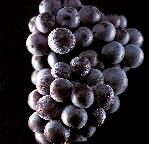
You say Kleenex I say Tissue; You say Champagne I say Sparkling Wine.
The same way that a Napa wine comes only from Napa Valley, California, Champagne comes only from Champagne, France. Unfortunately, over 50% of all sparkling wine sold in the United States is mislabeled
“Champagne.” The vast majority of them are produced from U.S. grapes. This practice seeks to trade on the good name of another location, as well as clearly mislead consumers. The deception is a problem for all winemakers who seek to differentiate their products by location. There is an undisputed and very important link between a wine’s location and its qualities. Different regions of the world offer different wine experiences, hence many winemakers display their geographic names or appellations. Identifying a wine’s location not only differentiates it from other wines, but also informs the consumer about its origin and attributes. Mislabeling wines with incorrect geographic indications undermines both all wine producing locations and consumer confidence in the information included in wine labels.
Some producers of mislabeled sparkling wine claim they will go out of business if they can no longer use the name “Champagne.” However, the facts do not support this claim. Approximately two billion bottles of sparkling wine are sold worldwide every year. Champagne produces just 280-300 million bottles, due to the stringent requirements for growing, harvesting and winemaking in the region. Many producers in countries throughout the world – including the United States, Australia, Italy and Spain – profitably produce and sell millions of bottles of sparkling wine without using the name “Champagne.”
Location is becoming an increasingly important factor for consumers. Whether you're talking about foods like Idaho potatoes or wines from Oregon origin matters. Where the product comes from says something important about its quality. That’s why there is so much emphasis today on protecting place names with truth in labeling.
This matter goes much deeper than Champagne, it's to protect the name an origin of all wine. This movement is not new. It began in 2005. The first declaration was signed July 26, 2005 and included seven wine regions. The original 7 are: Champagne, Napa, Oregon, Washington State, Jerez, Porto and Walla Walla. Since then, March of 2007 six more regions signed on. They are Chianti Classico, Sonoma, Victoria, Paso Robles,Tokaj and Western Australia. Below is a timeline of events courtesy of the www.protectplace.com
TIMELINE: GLOBAL MOVEMENT TO PROTECT WINE PLACE NAMES
The movement to end purposeful mislabeling and misuse of place names by some wine producers is growing larger every year. These milestones underscore the continued expansion and support by governments, courts and international trade officials to prevent consumers from being misled and to protect the reputations of wine regions around the world.
December 2008 - Australia and EU Sign Wine Accord: Australia proves that wine place names can be successfully protected through an unprecedented partnership between government and industry. The misuse of wine place names are to be phased out within a year while new names for some wines are adopted under the terms of this comprehensive agreement.
May 2007 - EU Grants Geographical Indication Napa Valley becomes the first wine region outside Europe and the only U.S. wine region to be legally protected from misuse of its name in Europe. The EU extends this protection due to Napa’s unwavering commitment to the protection of place names in the U.S.adds six new U.S. and international wine regions: Sonoma County, Paso Robles, Chianti Classico, Tokaj, Victoria and Western Australia.
December 2006 - Congress Passes Limited Legislation Protecting Wine Place Names: he future misuse of 16 wine place names is banned in the U.S. as Congress passes legislation approving the U.S.-EU Wine Accord. However, a gaping loophole allows the grandfathering of labels already misusing these names.
September 2006 - California Passes New Legislation Protecting Consumers: California protects its own wine regions with a law mandating that wines labeled Sonoma County must be made with at least 75% of Sonoma County grapes. Other states follow through creating a patchwork of incongruous laws across the country.
January 2006 – U.S. Supreme Court Upholds CA Law, Protects Napa Name: The U.S. Supreme Court steps in and affirms California state law reserving the Napa Valley name exclusively for wines from the Napa Valley appellation.
July 2005 - Transatlantic Agreement Signed by Six Renowned Wine Regions: For the first time, U.S. and EU wine regions come together for a single purpose when four U.S. and three EU wine regions sign the Joint Declaration to Protect Wine Place & Origin.transatlantic agreement, the Declaration is the beginning of a multi-year effort to educate policymakers and consumers around the world about the importance of place names. The signatories are Napa Valley, Oregon, Walla Walla Valley, Washington, Champagne, Jerez and Porto.
May 2005 - California Court Upholds Wine Labeling Law: In the first significant legal victory in the name protection fight, the California State Supreme Court upholds a labeling law requiring Napa-labeled wines to contain only Napa grapes.
Worldwide, consumers agree that a wine label should accurately reflect the contents of the bottle. In the United States - a country that prides itself on consumer protection - this is no different. A recent poll found that 63 percent of U.S. consumers support a law prohibiting misleading labels because they believe it is the best way to protect the names of wine regions around the world, including domestic names such as Napa Valley and Sonoma County. Considering the clear mandate from consumers, one has to ponder the question: Why would a small but powerful group of producers in the United States and around the world insist on misleading consumers? Learn more about the Joint Declaration to Protect Wine Place Origin at www.protectplace.com.
Tuesday, July 7, 2009
Method of making Champagne
 The process of making Champagne is an hands on method. From picking to Riddling. Methode Champenoise is the term use to make Champagne. Today we have two methods, Methode Classique or Methode Traditional.
First, fermentation occurs after the grapes are pressed and stored in stainless steel tanks. Some Champagne does go through the first fermentation in oak barrels. It is at this step where the yeats is added. The conversion of the sugars into ethanol and carbon dioxide produces the first fermentation. This process produces a still wine.
After the first fermentation, the winemaker or"chef de caves, cellar master as they are called in France" will blend the grapes. The blending of the grapes is different within each of the villages of Champagne and is different from vintage to vintage.
Once the blending is complete the wine is placed in the bottle in which the Champagne will be sold. A mixture of sugar, yeast and old wine is added in order to induce the mousse or bubbles. The bottle is then closed with a crown cap and laid down horizontally in a cool dark cellar. This second fermentation takes place over the course of three months. Carbon dioxide and fermentation lees form within the bottle. This long fermentation process is responsible for the formation of the tiny bubble characteristic of Champagne.
After the second fermentation the Champagne is aged. Champagne can be aged for up to three years and the finer Champagne can be aged more than six years. As the Champagne is aged, the wine does go through some changes due to the contact of the lees with the wine. This leads to some unique characters you may taste, flavors of nuttiness or toastiness.
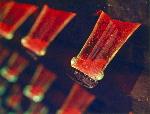
 Next step is the riddling. This step takes place after the aging is complete. The winemaker removes the dead yeast cells out of the bottle without losing the carbonation. Bottles are then placed in special racks that keep their necks tilted downward, forcing the dead yeast cells into the neck of the bottle. Twice a day the bottles are lightly lifted, turned a quarter of a turn and then put back down in the rack. This procedure is repeated every second or third day. This process averages eight weeks by hand.
The final stage of making Champagne is called Disgorgement and Dosage. In disgorgement, the necks of the bottles are frozen creating a small ice plug at the top of the bottle that traps the sediment of the dead yeast cells. when the caps are removed, the pressure released shoots the ice and all the yeast sediment out of the bottle. Some wine is lost by this process but is replaced through a process known as dosage. It consist of adding a small amount of sugar dissolved in wine before the cork is inserted into the bottle. This mix which is referred to as liqueur d'expedition, defines the sweetness of the dosage.
Next post - the Issue at Hand
Monday, July 6, 2009
Champagne or Sparkling Wine
 A while back I had a post about a local Champagne and referred to it as Sparkling Wine. I received some comments concerning the use of the word Champagne. I was under the impression if it wasn't made in Champagne, France it had to be called Sparkling wine. I was corrected by this winery to say that they can say their Sparkling Wine is Champagne.
I am not to sure about that. I have done a little research and have been in contact with the Office of Champagne in Washington DC. I am sure the next few post might stir some controversy, but I am just trying to educate all on what is really going on. This goes deeper than just Champagne, but to an entire global movement to protect wine place names.
First lets talk about Champagne. True Champagne comes from a special region in France, located 90 miles northeast of Paris. This unique location is a cool climate and chalky sub-soil combined to produce the only grapes in the world that can yield the Champagne of legends. These distinctive geographic characteristics form the Champagne terrior.
There are only three grapes allowed in the production of Champagne. They are Chardonnay, Pinot Noir and Pinot Meunier. Pinot Noir gives Champagne its strength and body, while Pinot Meunier is responsible for the roundness and fragrance of the wine. The Chardonnay provides the wine it its finesse as well as its floral and sometimes mineral overtones.
Champagne comes in many styles. Vintage Champagne which is made from grapes from a single harvest. Vintage Champagne is full bodied. Non Vintage Champagne accounts for up to 90% of all Champagne produced in France. It is a blend of grapes from different harvest years. Blanc de Blanc is made with only Chardonnay grapes for a light, and dry taste. Blanc de Noir is made with either one or both of the black grape varieties (Pinot Noir or Pinot Meunier). This is full bodied and usually deep yellow-gold in color. Rose which is available in a wide spectrum of pink hues and Demi-Sec which is a sweet champagne often paired with desserts.
All of the above represents what goes into a bottle of Champagne. Tomorrow I will post the process of producing Champagne and then we'll get into the controversy. It is important to have this background information first.
I would also like to thank the Office of Champagne, US for their assistance with providing me the information and documentation that you will see in the next few posts.
Thursday, July 2, 2009
NY's first Farm Distillery Whiskey Tasting Room
 You go wine tasting, but how about Spirit tasting. Tuthilltown Spirits, New York 's first Whisky distillery will be opening Friday July 3, 2009. Tuthilltown is the first New York Farm Distillery Whiskey Tasting room since prohibition. In addition, The Tuthilltown Grist Mill is listed on the National Register of Historic Places.
On Sunday, July 5th you can take part in the "gathering of the grain" where customers will be able to take part in the harvest of the Distillery's first crop of rye grain in the traditional method, by hand. You will then bundle it and stack it to dry. The Distillers will then take that rye, hand thresh and clean it and make whiskey.
Tuthilltown also offers classes where you will make your own whiskey. This combines technical instruction and practical experience.
Tuthilltown will be open this weekend Friday, July 3 - Sunday July 5 from 11am - 6pm. The tasting room hours for the rest of the season are Thursday - Monday 12pm - 6pm. Tours will be given Saturday and Sunday at 12pm and 3pm by reservation only.
Subscribe to:
Posts (Atom)